Cities, deserts, and river light

Gates Across Egypt

Home/Explore Egypt

8 destinations

Attraction image 89
Temple

Sohag

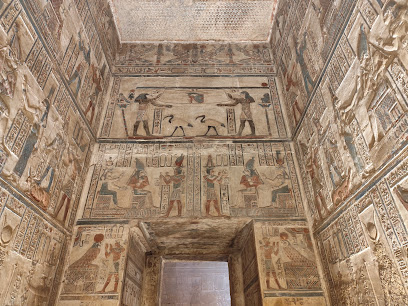
Temple of Seti I at Abydos

The Temple of Seti I at Abydos is a major New Kingdom monument begun by Pharaoh Seti I of the Nineteenth Dynasty and completed after his death by his son Ramesses II. It stands at Abydos, one of ancient Egypt’s most important religious centers and a major focus of the cult of Osiris. The temple is distinguished by its finely carved and partly preserved painted reliefs, two hypostyle halls, and seven principal chapels dedicated to Seti I, Ptah, Re-Horakhty, Amun-Re, Osiris, Isis, and Horus. Among its most significant features is the Abydos King List, which depicts Seti I and the future Ramesses II honoring a selected sequence of earlier Egyptian rulers. The monument is especially important for the study of royal cult, temple ritual, Egyptian kingship, and New Kingdom religious art.
Attraction image 7
Temple

Aswan

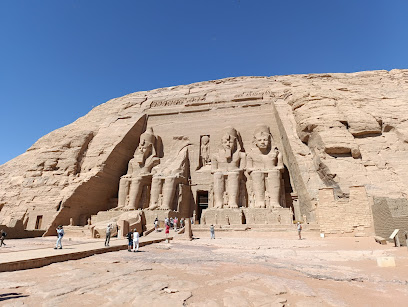
Abu Simbel Temples

The Abu Simbel Temples are two monumental rock-cut sanctuaries overlooking Lake Nasser in southern Nubia, within Egypt's Aswan Governorate. Commissioned by Pharaoh Ramesses II of the Nineteenth Dynasty around 1264 BCE, the Great Temple is famous for four immense seated statues of the king and an interior sanctuary dedicated to Amun-Ra, Ra-Horakhty, Ptah and the deified Ramesses II. Twice each year, sunlight travels deep into the Great Temple, illuminating three sanctuary figures while Ptah remains in shadow. Nearby, the smaller temple honours the goddess Hathor and Queen Nefertari, whose statues stand remarkably equal in height to those of her husband. Threatened by the waters of Lake Nasser, both temples were dismantled and reconstructed on higher ground through an international conservation campaign completed in 1968. Abu Simbel forms part of the UNESCO World Heritage property Nubian Monuments from Abu Simbel to Philae, inscribed in 1979.

Attraction image 90
Museum / Archaeological Site

Sohag

Akhmim Open-Air Museum

Akhmim Open-Air Museum is an archaeological display area within the remains of a monumental ancient Egyptian temple in Akhmim, Sohag Governorate. Its most celebrated feature is the colossal limestone statue of Meritamun, daughter of Ramesses II and Queen Nefertari, who later held the title of Great Royal Wife. The museum also presents a reconstructed statue of Ramesses II, surviving temple masonry, architectural fragments and evidence of the site's long history. The exposed remains were discovered during archaeological work beginning in 1981, and the excavated area became an open-air museum in 1995. Egypt's Ministry of Tourism and Antiquities records the restoration and re-erection of the standing Ramesses II statue beside Meritamun in April 2019. The museum offers a rare opportunity to examine monumental New Kingdom sculpture in its archaeological setting while appreciating how much of ancient Akhmim remains concealed beneath the modern city.

Attraction image 49
Modern Landmark

Cairo

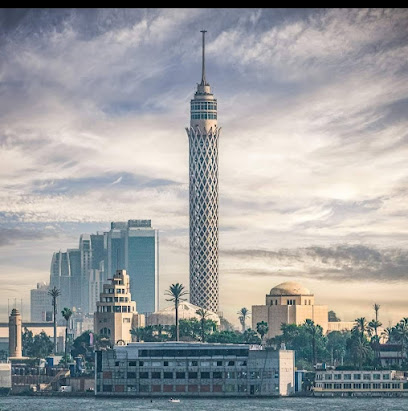
Cairo Tower

A modern tower on Gezira Island offering panoramic views over Cairo and the Nile.

Attraction image 32
Religious Site

Cairo

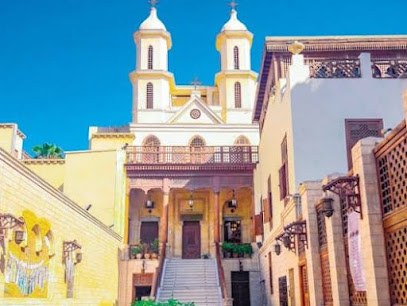
Hanging Church

A historic Coptic church in Old Cairo built above a Roman fortress gatehouse.

Attraction image 16
Natural Landmark / Religious Site

South Sinai

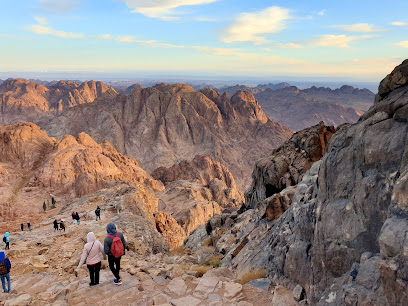
Mount Sinai

A mountain in the Sinai Peninsula believed to be the site where Moses received the Ten Commandments.

Attraction image 81
Temple

Luxor

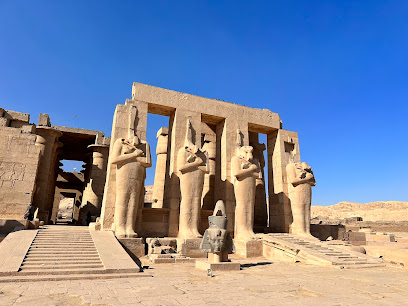
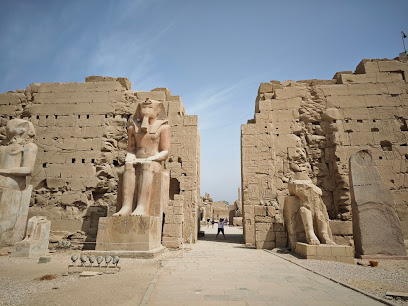
Ramesseum

The mortuary temple of Ramesses II on Luxor's West Bank, known for colossal statuary and reliefs.

Attraction image 11
Fortress

Cairo

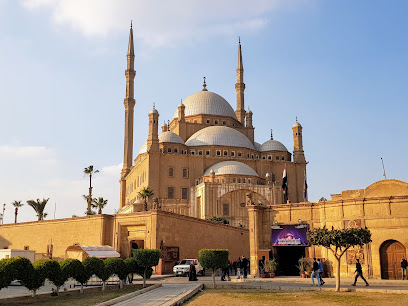
Saladin Citadel of Cairo

A medieval Islamic-era fortification in Cairo, containing the prominent Mosque of Muhammad Ali and offering sweeping city views.