
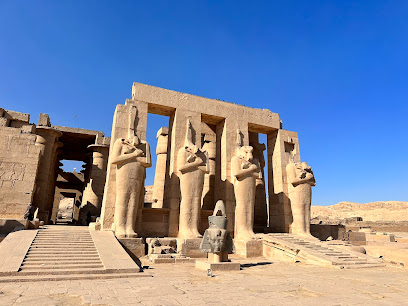
The Ramesseum is the mortuary temple of Ramesses II on Luxor’s West Bank. The official monument description highlights its chapels, service buildings, bakeries, kitchens, warehouses, battle reliefs, religious scenes, majestic columns, and colossal statues. It is one of the key places for understanding the royal image of Ramesses II and the architectural ambition of New Kingdom Thebes.
A strong attraction page should present the Ramesseum as more than ruins. It was a living temple complex with ritual, storage, administration, and production spaces. Recent archaeological work around the temple has revealed additional evidence of daily and institutional activity, including workshops and storage areas. This makes the Ramesseum valuable not only for monumental art but also for understanding how a great temple functioned.
For SEO, target “Ramesseum Luxor”, “Temple of Ramses II”, “Ramesses II mortuary temple”, and “Luxor West Bank temples”. The page should explain why visitors should include it with Medinet Habu, Hatshepsut Temple, Deir el-Medina, and the Colossi of Memnon. It can also mention that the famous fallen colossus inspired generations of travelers and writers, while keeping the main focus on the Egyptian historical context.
A practical section should advise travelers to allow enough time to walk through the complex, notice reliefs of the Battle of Kadesh, look for column details, and appreciate the open desert setting. The site is exposed, so timing, water, and sun protection matter.
The hero image should show columns, reliefs, or the fallen colossal statue. Arabic content should use “الرامسيوم” and “معبد رمسيس الثاني الجنائزي” naturally. In the Pyramids Gates catalog, the Ramesseum should be linked to deeper Luxor archaeology tours rather than only quick West Bank highlights.