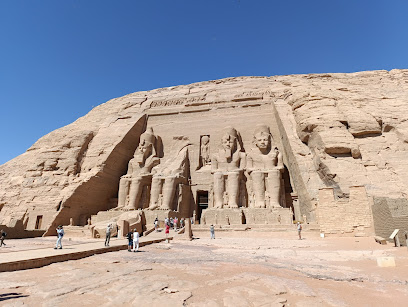
Abu Simbel in the Landscape of Nubia
Abu Simbel stands in southern Egypt, on the western side of Lake Nasser, within Aswan Governorate. The archaeological complex consists of two temples originally carved directly into a sandstone mountainside. Its position in Nubia is important to understanding the relationship between ancient Egypt and the lands farther south along the Nile. Today, the two monumental façades rise above the lake in a reconstructed setting that preserves the visual grandeur of the temples while recalling the enormous effort needed to save them from flooding.
Ramesses II and the Nineteenth Dynasty
Both temples were commissioned by Ramesses II, one of the best-known rulers of Egypt's Nineteenth Dynasty. The Egyptian Ministry of Tourism and Antiquities dates the carving of the Great Temple to around 1264 BCE. The project combined religious devotion, royal representation and an impressive demonstration of the resources available to the king. Abu Simbel is therefore more than an isolated work of sculpture: it is evidence of how monumental architecture communicated pharaonic authority in the southern Nile Valley.
The Four Colossi of the Great Temple
The most recognizable feature of Abu Simbel is the Great Temple's façade, dominated by four immense seated representations of Ramesses II. UNESCO describes the statues as approximately twenty-one metres high. Their scale creates a commanding introduction to the monument, while their repetition reinforces the image of the king. One statue was damaged by an ancient earthquake, and fragments remain near its base. The damaged figure is part of the surviving history of the site rather than a modern reconstruction error.
Inside the Great Temple
Passing the façade leads into a sequence of rock-cut interior spaces. The main hall contains colossal standing figures associated with the king and guides visitors toward the sanctuary. At the far end are four seated figures representing Amun-Ra, Ra-Horakhty, Ptah and Ramesses II in his deified form. Their arrangement illustrates the close relationship between divine worship and royal ideology. The movement from the bright exterior through increasingly enclosed chambers also gives the building a striking ceremonial character.
The Famous Solar Illumination
One of Abu Simbel's most remarkable architectural effects occurs when sunlight reaches the innermost sanctuary of the Great Temple. According to Egypt's Ministry of Tourism and Antiquities, the phenomenon occurs on February 22 and October 22. Light passes through the temple and illuminates the figures of Amun-Ra, Ra-Horakhty and the deified Ramesses II, while Ptah remains in shadow. This carefully arranged relationship between the building and sunlight is an exceptional feature of the monument. Claims that the two dates certainly mark the king's birthday and coronation should not be treated as established historical facts.
The Small Temple of Hathor and Nefertari
North of the Great Temple stands the smaller sanctuary, also carved into the rock under Ramesses II. It honours the goddess Hathor and the king's Great Royal Wife, Queen Nefertari. Its façade displays royal figures in an arrangement that gives Nefertari unusually prominent visual status. The Egyptian Ministry of Tourism and Antiquities highlights that her colossal statues are the same height as those of her husband, a rare treatment in monumental royal imagery. The temple provides an essential counterpart to the king-centred programme of the larger sanctuary.
Art, Religion and Royal Representation
The carved figures and decorated temple interiors express a religious and political message. In the Great Temple, Ramesses II appears alongside major gods and is represented in divine form within the sanctuary. In the smaller temple, the dedication to Hathor and Nefertari brings the queen into an unusually prominent sacred setting. Together, the monuments demonstrate how architecture, sculpture and religious imagery were coordinated to present royal power. Reading the temples as both artistic achievements and statements of kingship gives their enormous scale greater meaning.
The Threat Posed by the Aswan High Dam
The modern history of Abu Simbel changed dramatically with the construction of the Aswan High Dam. The reservoir that became Lake Nasser threatened ancient monuments throughout the Nubian Nile Valley, including both temples. In 1959, Egypt and Sudan sought UNESCO's assistance, and an international campaign began in 1960. The challenge extended beyond Abu Simbel: archaeological recording, excavation and the rescue of endangered structures took place across a broad region. The campaign is now remembered as an important turning point in international heritage conservation.
Dismantling and Rebuilding the Temples
Saving Abu Simbel required the temples to be cut into carefully documented stone blocks, transported and reconstructed in a purpose-built setting on higher ground. UNESCO records that more than a thousand blocks were handled and that the reconstructed monuments were placed approximately sixty-four metres above the former site and farther inland. The work at Abu Simbel was completed in September 1968. The visible temples today preserve the essential architectural composition of the ancient monuments while also embodying an extraordinary twentieth-century engineering and conservation achievement.
UNESCO World Heritage and Visiting with Understanding
In 1979, Abu Simbel was inscribed as a component of the UNESCO World Heritage property called Nubian Monuments from Abu Simbel to Philae. That designation covers several distinct archaeological areas rather than only the two temples. UNESCO recognizes both the outstanding creativity of the monuments and the importance of their preservation. A rewarding visit considers the Great Temple, the Hathor and Nefertari sanctuary, their relationship to the surrounding Nubian landscape and the story of their relocation. Visitors should respect protective barriers and current on-site conservation guidance; opening arrangements and admission conditions should be checked through official channels before travelling.