Akhmim Open-Air Museum: An Introduction
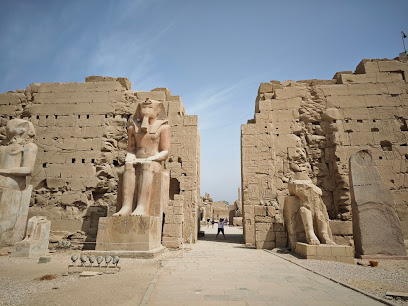
Akhmim Open-Air Museum preserves a remarkable exposed section of an ancient Egyptian temple complex within the modern town of Akhmim in Sohag Governorate. Rather than presenting antiquities in conventional indoor galleries, the museum allows visitors to examine monumental sculpture and architectural remains close to where they were discovered. Its principal attractions are the colossal limestone figure of Meritamun and the restored standing statue of her father, Ramesses II. The setting creates an unusually direct encounter with the archaeology of ancient Upper Egypt.
Akhmim, the Ancient City of Min
Akhmim was an important settlement in the Nile Valley and the centre of a major cult of the ancient Egyptian god Min. Ancient Egyptian names associated with the city include Ipu and Khent-Min, while Greek writers knew it as Panopolis. The city served as the capital of the ninth Upper Egyptian nome. Its long history extended through pharaonic, Graeco-Roman and later periods. The open-air museum represents only a surviving fragment of this much larger archaeological landscape, much of which lies beneath modern streets and buildings.
What Can Be Seen at the Museum?
The museum centres on monumental statues, excavated stonework and architectural fragments associated with the ancient temple. The towering figure of Meritamun dominates the exposed area, while the reconstructed statue of Ramesses II stands nearby. Other remains help illustrate the original ceremonial setting, including elements associated with the temple entrance and its architectural arrangement. Additional sculptures and fragments reflect different phases of activity in Akhmim. The visible site should be understood as an excavated portion of a larger sanctuary rather than the complete original temple.
The Colossal Statue of Meritamun
The museum's best-known monument represents Meritamun, daughter of Ramesses II and Queen Nefertari. After her mother's death, Meritamun held the important royal title of Great Royal Wife. Her colossal limestone statue is celebrated for its scale, elaborate royal dress, headdress and carefully carved details. The Egyptian Ministry of Tourism and Antiquities reports a height of approximately 13 metres and a weight of about 31 tonnes, although measurements differ in archaeological publications. The statue provides important evidence of the public representation and ceremonial status of royal women during the Nineteenth Dynasty.
Ramesses II and the Restored Colossus
Another major feature is the monumental standing statue of Ramesses II. It was discovered in numerous broken pieces and required extensive documentation and conservation before being reconstructed. According to the Ministry of Tourism and Antiquities, the surviving and reassembled monument is approximately 12 metres high and weighs about 45 tonnes. The king is represented wearing the White Crown of Upper Egypt, with hieroglyphic inscriptions on the supporting back pillar. In April 2019, the restored statue was raised and presented beside Meritamun, restoring an important part of the site's monumental appearance.
Temple Architecture and the Cult of Min
The exposed remains belong to a much larger religious complex associated with the worship of Min. Archaeological studies identify foundations and architectural evidence connected with a monumental entrance dating to the Ramesside period. The placement of large royal statues near the temple entrance reflects the importance of kingship, religious ceremony and the public presentation of royal authority. Because the wider temple remains only partially excavated, reconstructions of its complete layout are necessarily interpretive. Visitors can examine surviving evidence without assuming that the original architectural arrangement is fully known.
Discovery in 1981 and the Museum's Development
Modern archaeological investigation at the site followed discoveries made during construction work in 1981. Excavations uncovered the colossal Meritamun statue and substantial remains associated with Ramesses II and the ancient temple. Additional discoveries in 1991 included parts of another large seated royal statue in the surrounding area. A peer-reviewed study published in Heritage Science records that the excavated temple section became an open-air museum in 1995. These developments transformed an area of buried remains into an important archaeological landmark within the modern city.
Evidence from Later Historical Periods
Akhmim remained important after the New Kingdom. Research into the ancient city documents temple activity and architectural changes extending into the Graeco-Roman period. Sculptural remains from later periods help demonstrate the continuing use and reinterpretation of the sacred landscape. A female statue traditionally associated with Aphrodite or Venus has been discussed in archaeological studies of the site, although such identifications should be treated cautiously where inscriptions are absent. These different layers remind visitors that Akhmim's history cannot be reduced to the reign of a single pharaoh.
Archaeological Conservation and the Buried City
Preservation is particularly important at Akhmim because the archaeological remains exist within a densely developed modern settlement. Much of the ancient temple is still buried beneath surrounding structures. Research published in Heritage Science has examined how urban expansion and groundwater chemistry can threaten buried architectural materials. Soluble salts, moisture and changes in the surrounding environment create risks for vulnerable stonework. Conservation therefore involves more than reconstructing individual statues: it also requires studying, documenting and protecting the archaeological context that survives below and around the displayed monuments.
Understanding a Visit to Akhmim
A visit to the open-air museum is most rewarding when approached as an opportunity to examine an archaeological excavation rather than a conventional indoor museum. The principal focus is the relationship between the royal statues, surviving architecture and the history of Akhmim. The setting also offers a perspective on how the ancient city and the modern town occupy the same ground. Visitors interested in Egyptology can connect the visible remains with the wider history of Min worship, Ramesside royal art and the continuing challenges of protecting ancient heritage.