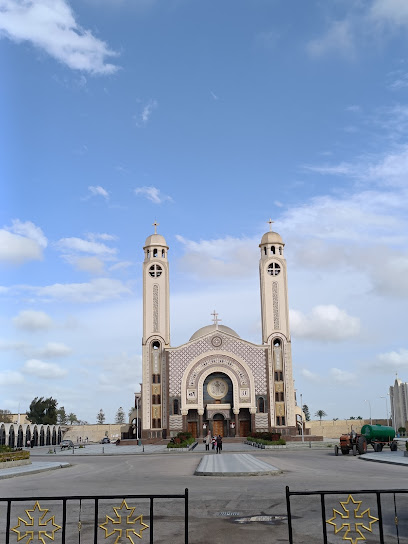
Abu Mena: A Christian City in the Mariut Desert
Abu Mena stands in the Mariut desert southwest of Alexandria, within the Borg El Arab area of Alexandria Governorate. Unlike a single isolated monument, it preserves the archaeological outline of an extensive religious settlement. Churches, streets, pilgrims' accommodation, workshops and domestic buildings developed around a central sacred precinct. Its location between Alexandria and the wider desert routes helped connect an Egyptian shrine with visitors travelling across the eastern Mediterranean. The surviving ruins reveal the relationship between a holy destination and the practical needs of a populated town.
Saint Menas and the Origins of the Shrine
The history of Abu Mena is inseparable from the veneration of Saint Menas, an early Christian martyr associated with Alexandria and the Roman period. UNESCO identifies his death with AD 296, while Egyptian heritage accounts use slightly different chronological descriptions. According to Christian tradition, a camel carrying his remains stopped in the desert, indicating where he should be buried. Accounts of healing and a sacred spring belong to the site's devotional tradition; they are not independently established archaeological events. The historical significance lies in how belief surrounding the burial place inspired a major pilgrimage centre.
From a Burial Place to a Pilgrimage Centre
By the late fourth century, the shrine had become an established focus of Christian devotion. Its most significant urban and architectural expansion took place during the fifth and sixth centuries, within a broader flourishing that extended into the seventh century. As pilgrimage increased, the settlement required larger worship spaces, accommodation, bathing facilities, places to gather and systems for supplying visitors. Abu Mena consequently grew beyond the scale of a tomb shrine. It became a distinctive example of how religious travel could sustain a substantial late-antique community.
The Tomb Church and Sacred Crypt
The complex associated with the saint's burial formed the spiritual centre of Abu Mena. Archaeological investigations identified successive building phases in which a relatively early burial-related structure developed into more elaborate churches. Changes to the crypt and its approaches helped accommodate the movement of increasing numbers of pilgrims. The surviving remains are therefore valuable not simply as ruins of a church but as evidence of changing ritual requirements. The physical layout shows how access to a revered burial place influenced architectural planning over several centuries.
The Great Basilica and Baptistery
Among the principal monuments are the Great Basilica and the remains of the baptistery. The basilica represents the ambition and resources invested in a pilgrimage destination serving large congregations. Its surviving foundations help archaeologists reconstruct the arrangement of the nave, supporting spaces and associated ecclesiastical buildings. The baptistery demonstrates that Abu Mena was also equipped for important Christian rites beyond visits to the tomb. Together, these structures illustrate the architectural complexity of the settlement and the central place of worship in its organization.
The Pilgrims' Court and Places of Hospitality
A major feature of the ancient complex is the Pilgrims' Court, described by Egypt's Ministry of Tourism and Antiquities as a large space bordered by porticoes with marble columns. It provided a gathering place for people arriving at the shrine. Nearby accommodation buildings and other facilities responded to the practical demands of travel, rest and religious observance. Their arrangement shows that pilgrimage required more than monumental churches. Organizing visitor movement, hospitality and communal activity was fundamental to the functioning of this desert settlement.
Homes, Baths, Workshops and Daily Life
Abu Mena was also a place of residence and production. UNESCO records domestic buildings, public baths, cisterns, pottery kilns and installations associated with processing olives, oil, raisins and wine. These remains provide evidence of food production, crafts, water management and the services that supported a populous pilgrimage centre. Ceramic manufacture was particularly connected with the movement of visitors, and archaeological research has examined vessels associated with devotion to Saint Menas. The broader settlement is consequently essential for understanding the shrine's economic and social history.
Architecture and Mediterranean Connections
The architectural remains combine techniques associated with Egyptian building traditions and wider Mediterranean practices. UNESCO identifies limestone masonry bonded with mortar, marble columns, traces of mosaic decoration and simpler mudbrick buildings coated with plaster. Different materials and building forms were employed for different purposes, from major churches to modest service structures. This variety gives the site particular importance for studying early Christian architecture. Abu Mena demonstrates how ideas moved between Egypt and other Mediterranean regions while being adapted to local resources and religious needs.
Archaeological Rediscovery and Excavations
The ancient settlement gradually lost its former importance and much of its built environment became buried or ruined. Modern archaeological investigation began prominently with the work of the German archaeologist Carl Maria Kaufmann in the early twentieth century, including excavations from 1905 onward. Subsequent Egyptian and international teams investigated churches, burial areas, residential quarters and associated infrastructure. Their work transformed scattered remains into a more intelligible urban plan. The evidence remains important for reconstructing the development of Christianity, settlement and pilgrimage in late-antique Egypt.
Why Abu Mena Became a UNESCO World Heritage Site
Abu Mena entered the UNESCO World Heritage List in 1979 under cultural criterion (iv). The inscription recognizes its exceptional importance as an early Christian monastic and pilgrimage centre and the architectural evidence of a large religious settlement. UNESCO records an inscribed property of 182.72 hectares. The site's significance rests on the combined remains of churches, funerary structures, places for pilgrims and ordinary urban buildings. Its outstanding value is therefore expressed through the overall archaeological landscape, rather than through the preservation of a single intact monument.
Groundwater Threats and Conservation
The expansion of agriculture and irrigation around Abu Mena contributed to rising groundwater levels that threatened archaeological foundations and surviving masonry. UNESCO placed the property on the List of World Heritage in Danger in 2001. Egyptian authorities and conservation partners subsequently implemented groundwater-lowering and monitoring measures alongside stabilization and restoration work. In 2025, the World Heritage Committee formally removed Abu Mena from the danger list after determining that the required conservation milestone had been reached. That decision did not end the need for monitoring, maintenance and protection from environmental risks.
Understanding the Ruins and Respecting the Site
The most rewarding way to understand Abu Mena is to read the surviving foundations as parts of an interconnected city: the sacred tomb precinct, larger churches, pilgrims' gathering spaces, service buildings and residential areas. Many ancient walls survive only in partial form, so the historical layout requires interpretation rather than the expectation of complete standing monuments. The archaeological World Heritage property should not be confused with the nearby active Monastery of Saint Mina. Visitors should follow authorized access routes, respect conservation barriers and confirm current arrangements through official Egyptian heritage channels before travelling.