
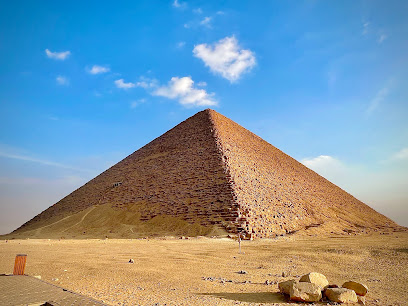
The Red Pyramid at Dahshur is one of the key monuments in the history of pyramid construction. Built for King Sneferu of the Fourth Dynasty, it is widely understood as Egypt’s first successful true smooth-sided pyramid. Its name comes from the reddish color of the exposed limestone blocks, although the pyramid was originally covered with fine white Tura limestone.
The Red Pyramid matters because it shows the moment when pyramid engineering became more stable and confident after earlier experiments. Sneferu’s builders had already attempted major projects, including the Bent Pyramid nearby. At the Red Pyramid, the angle, structure, and internal passages achieved a form that paved the way for the later pyramids of Giza.
Visitors often appreciate the Red Pyramid because it is monumental but less crowded than the Giza pyramids. Depending on current access rules, travelers may be able to enter through a northern passage and experience the internal chambers. A blog page should explain its historical importance, its connection to Sneferu, the reason behind its color, and how it fits within a Dahshur, Saqqara, and Memphis itinerary.