
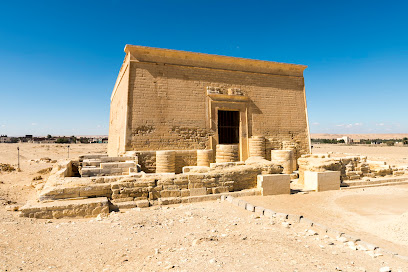
Qasr Qarun Temple is one of Fayoum’s most interesting archaeological stops, standing near the western side of Lake Qarun in a landscape where desert, water, and ancient settlement meet. The temple is usually associated with the Ptolemaic period and the ancient town of Dionysias, a settlement connected with routes across the Western Desert.
The building is compact compared with the great temples of Luxor or Aswan, but that is part of its appeal. Visitors can experience the stone architecture at close range and understand how Fayoum’s ancient communities were linked to both local cults and wider Mediterranean-era Egypt. The temple is often connected with Sobek, the crocodile god strongly associated with Fayoum, and later traditions also link the area with Dionysus.
A useful attraction page should present Qasr Qarun as part of a Fayoum archaeological circuit. It pairs naturally with Lake Qarun, Karanis, Kom Aushim Museum, Medinet Madi, and Tunis Village. Many travelers do not know that Fayoum contains rich Greco-Roman heritage, so the page should explain the regional context: this was not a remote empty desert, but a settled and connected landscape.
One of the most famous modern visitor interests is the annual solar alignment reported at the temple around the winter solstice, when sunlight reaches the inner areas of the building. This should be described carefully as a visitor phenomenon and not exaggerated beyond evidence. It can still be a strong SEO and storytelling element if presented responsibly.
Travelers should expect a quiet, atmospheric site rather than a heavily interpreted museum. A guide can improve the experience by explaining the layout, religious associations, and relationship with the lake and ancient routes. Comfortable shoes, water, and sun protection are recommended, especially when visiting in combination with other Fayoum desert sites.
For SEO, target phrases such as “Qasr Qarun Temple,” “Fayoum temples,” “Ptolemaic temple in Fayoum,” and “Lake Qarun archaeological sites.” The page should position the temple as a compact but meaningful monument: a place where visitors can see how Fayoum’s ancient identity was shaped by water, desert roads, local gods, and the cultural mixture of Greco-Roman Egypt.