
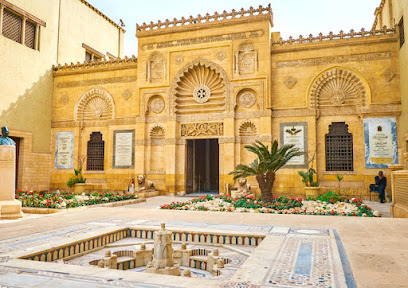
The Coptic Museum in Old Cairo is the main place to understand Egypt’s Christian heritage and the artistic bridge between ancient, Roman, Byzantine, and Islamic Egypt. Located in Coptic Cairo near churches, a synagogue, and the remains of the Babylon Fortress, the museum gives visitors context before exploring the surrounding religious monuments.
Its galleries show how Coptic art developed its own character while still reflecting older Egyptian and Mediterranean traditions. Visitors can expect carved stone, textiles, manuscripts, icons, woodwork, metalwork, and architectural fragments. Many objects show a mixture of influences: pharaonic symbols, Greek and Roman forms, Christian themes, and later decorative styles. This makes the museum especially important for travelers who want to see Egyptian history as a continuous story, not a set of separated periods.
The Coptic Museum is also useful because the surrounding area can be confusing without background. After seeing the museum, churches such as the Hanging Church and Saints Sergius and Bacchus become easier to understand. Details in screens, icons, columns, and sanctuary layouts feel more meaningful when visitors already know the artistic vocabulary.
For an attraction detail page, this museum should be described as a quiet, deep, and highly cultural stop. It is not only for religious travelers; it is for anyone interested in art history, identity, manuscripts, architecture, and the transformation of Egypt from the ancient world into late antique and medieval forms. It pairs perfectly with a walking tour of Coptic Cairo.