
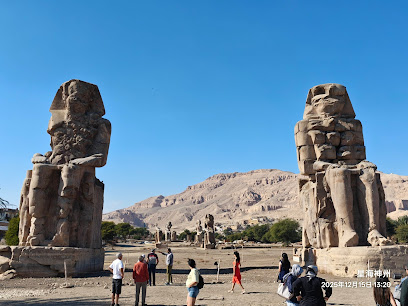
The Colossi of Memnon are two enormous seated statues of Amenhotep III on Luxor’s West Bank. They once stood before the king’s vast mortuary temple, much of which has disappeared or survived only in fragments. Today, the statues are among the easiest West Bank landmarks to recognize, often visited on the way to the Valley of the Kings, Hatshepsut Temple, the Ramesseum, or Medinet Habu.
The power of the Colossi lies in scale and survival. Even without the full temple behind them, the statues communicate the ambition of Amenhotep III’s reign and the monumentality of New Kingdom royal architecture. Modern restoration and archaeological work around the statues and the temple area continue to reveal parts of the original complex, including sculpture fragments and decorated architectural remains.
For SEO, the page should target “Colossi of Memnon”, “Luxor West Bank statues”, “Amenhotep III mortuary temple”, and “things to see on Luxor West Bank”. It should explain that the attraction is often a short stop, but historically it opens the story of one of the largest royal temple landscapes in ancient Thebes. This helps prevent the page from becoming only a photo caption.
A visitor guide should suggest early morning or late afternoon light for photos, while reminding travelers to respect barriers and conservation areas. Because the site is exposed, sun protection and water are helpful. The attraction can be linked to West Bank day tours, photography routes, and family-friendly archaeology introductions.
The hero image should show both statues clearly, ideally with the Theban hills or open West Bank landscape behind them. The Arabic text should use “تمثالا ممنون” and explain that they are statues of Amenhotep III, not a separate mythological figure, while noting the famous later name by which travelers know them.