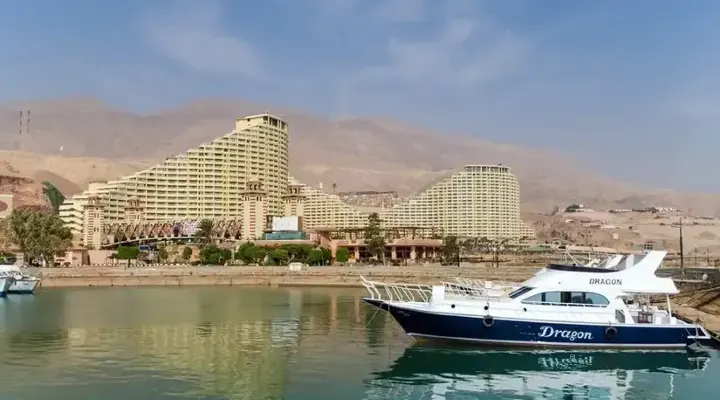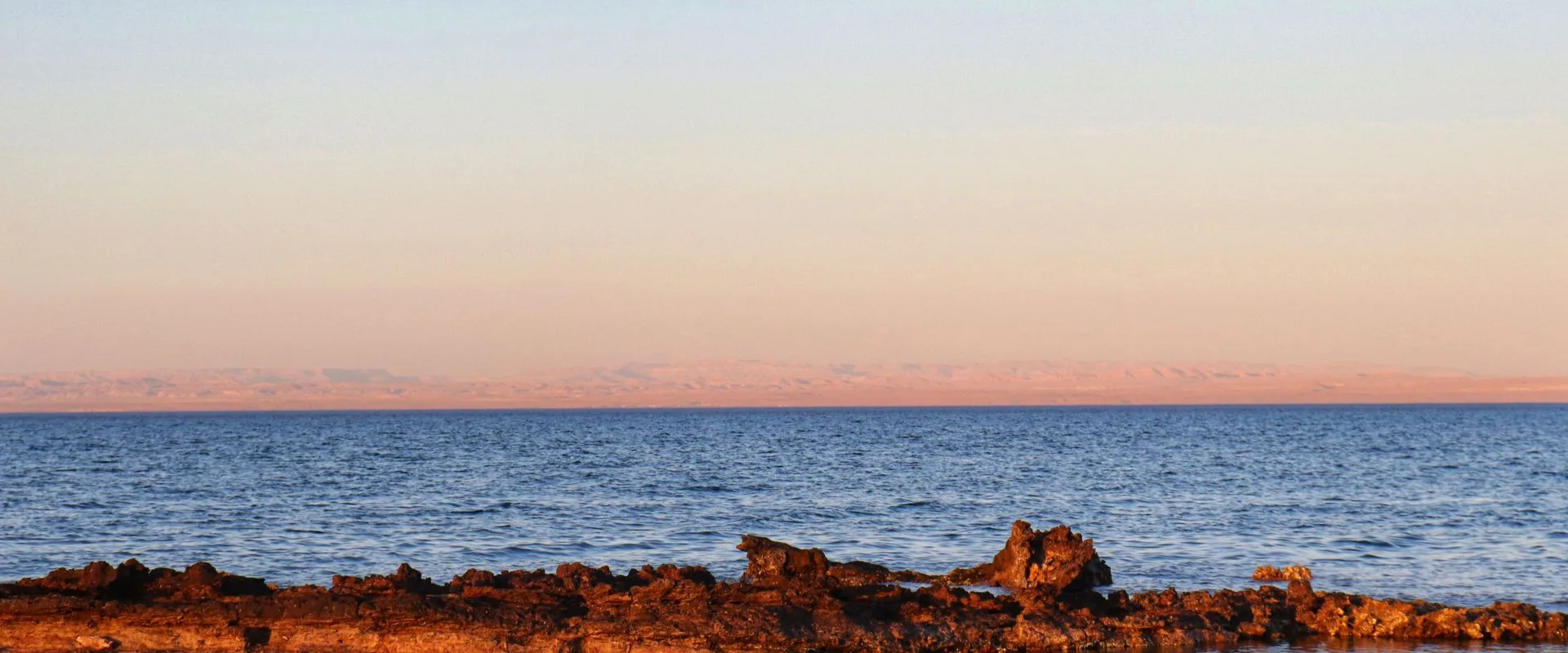
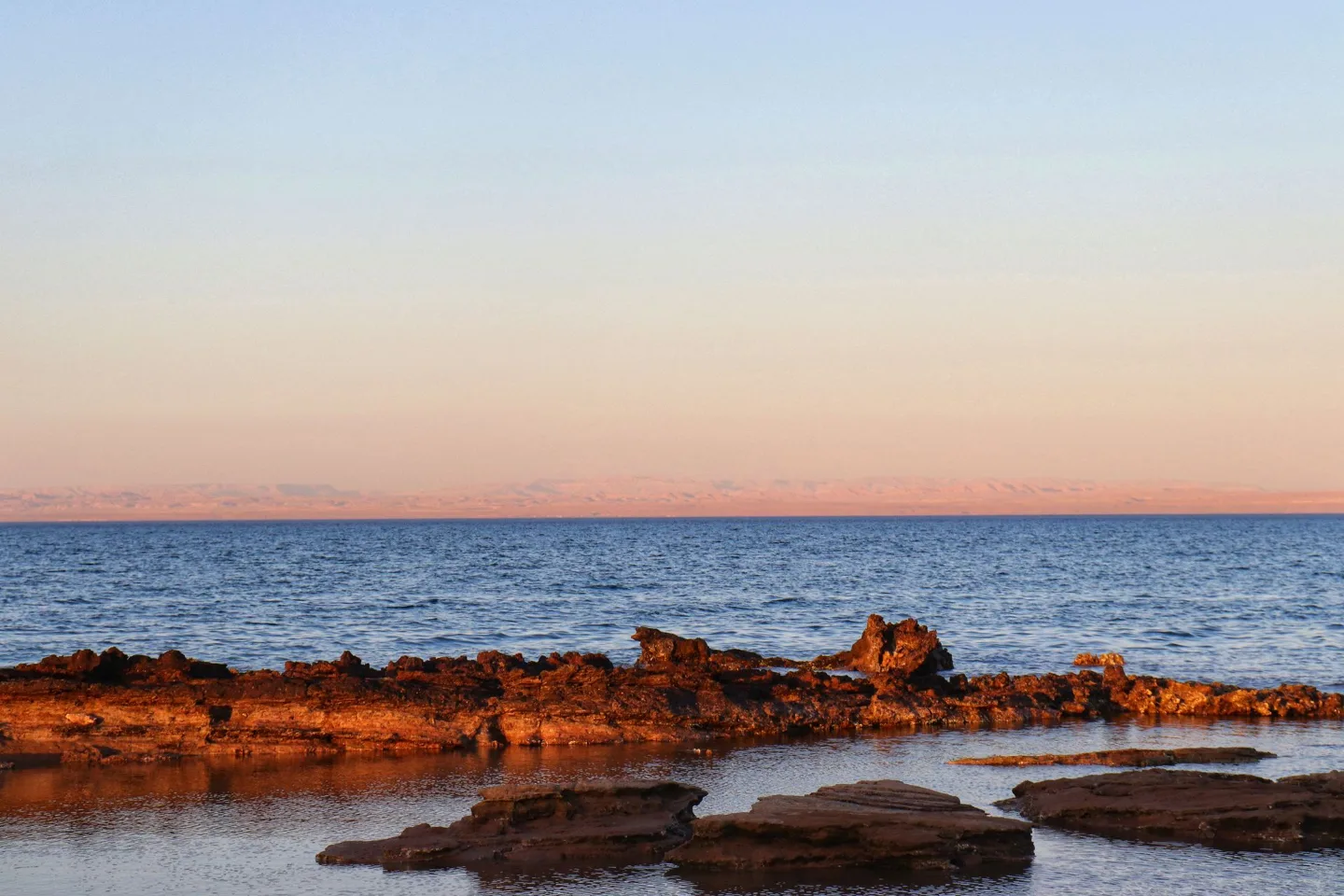
Ain Sokhna at a Glance
Ain Sokhna is a coastal resort destination in Suez Governorate, about 55 km south of Suez, on the western side of the Gulf of Suez. Its position relatively close to Cairo has made it one of the capital’s best-known destinations for short seaside trips and weekend stays. Egypt’s official tourism portal describes Sokhna as a Red Sea resort town surrounded by golden mountains, with a coastline extending for roughly 60 km.
The destination combines sandy beaches and clear coastal waters with a stark desert-and-mountain landscape. Ain Sokhna is also associated with natural warm sulfur springs; Egypt’s State Information Service records springs with water at about 35°C and links these springs to the area’s name, which means “hot spring.” The same official source identifies fishing, diving, water skiing, mountaineering and underwater photography among activities associated with the area.
Its combination of beaches, resorts, marine recreation, mountains and easy access from Cairo has established Ain Sokhna as both a summer and winter leisure destination rather than solely a seasonal beach resort.
Where Ain Sokhna Is: Between Cairo and the Gulf of Suez
Ain Sokhna lies in Suez Governorate on Egypt’s Red Sea coast, along the Gulf of Suez. The Egyptian State Information Service places it about 55 km south of Suez, while an official Egyptian Tourism Authority guide describes it as approximately 120 km east of Cairo. This position gives the destination an unusual geographic advantage: it combines access to the Red Sea with relatively short road connections to Egypt’s capital and the city of Suez.
The official Experience Egypt tourism portal characterizes Ain Sokhna as Cairo’s weekend beach getaway and notes that it is readily accessible from the capital by car or bus. Its developed tourism zone extends along a coastline of roughly 60 km, where beaches, hotels, holiday properties and recreational facilities occupy the narrow meeting point between the Gulf of Suez and the surrounding desert mountains.
This location also places Ain Sokhna within a broader coastal corridor that includes Suez to the north and Al-Galala nearby on the Red Sea coast. The area is therefore not an isolated beach resort but part of an increasingly connected coastal region linked to Cairo and Egypt’s national highway network.
The Ancient Egyptian Harbor of Ayn Soukhna
Modern Ain Sokhna is also home to one of the most important known Pharaonic harbor sites on the western shore of the Gulf of Suez. The archaeological settlement of Ayn Soukhna was identified in 1999, after numerous hieroglyphic rock inscriptions revealed repeated ancient activity at the site. Excavations by a joint French-Egyptian mission began in 2001 and have shown that the location functioned as an intermittently used harbor and logistical base, rather than as a permanently occupied port city.
The principal phases of Pharaonic use date to the Old Kingdom, from approximately the reign of Khafra to that of Pepy II, and the early Middle Kingdom, particularly from Montuhotep IV to Senwosret I. Evidence also indicates later episodes of activity, including inscriptions connected with expeditions during the reigns of Amenhotep I and Amenhotep III in the 18th Dynasty.
Its position was strategically useful. Ayn Soukhna stood on the western coast of the Gulf of Suez and was connected by desert routes with the region of Memphis, one of ancient Egypt’s principal administrative centers. It also had access to drinkable water and a relatively sheltered coastal setting. From here, Egyptian expedition teams could cross the Gulf of Suez toward the mineral-rich areas of South Sinai, especially regions associated with copper and turquoise.
One of the site’s most revealing archaeological features is a complex of storage galleries cut into the rock. Ten galleries in the upper part of the site were used to protect equipment between expeditions. Excavations found evidence that dismantled boats and maritime equipment were stored inside; remarkably, remains of boats were discovered in two galleries after they had been carefully placed there and subsequently destroyed by fire. The lower part of the site contained areas used by expedition personnel for habitation, cooking, administration, temporary storage and workshops.
These discoveries demonstrate that Ain Sokhna’s relationship with the Red Sea began thousands of years before the development of the modern resort. Archaeologically, the site forms part of a wider network of Pharaonic Red Sea harbors that also includes Wadi el-Jarf and Mersa Gawasis, providing evidence for the organization, logistics and maritime capabilities behind ancient Egyptian expeditions.
Pharaonic Expeditions, Ships, Copper, and Turquoise
Ayn Soukhna was closely connected with ancient Egyptian expeditions to the mineral-producing regions of South Sinai, where the Egyptians sought resources including copper and turquoise. The harbor served as a staging and logistical point: expedition teams could travel from the Nile Valley to the Gulf of Suez, prepare or retrieve their vessels at Ayn Soukhna, cross the gulf, and continue toward the mining districts of southwestern Sinai. Archaeological research identifies these mining expeditions as one of the principal reasons for the harbor’s repeated use.
Inscriptions found at the site provide unusually direct evidence for these operations. An inscription associated with the reign of Djedkare-Isesi records an expedition bound for the “Terraces of Turquoise,” an ancient Egyptian designation for the South Sinai mining region, and names an official called Sedhotep as its leader. Middle Kingdom inscriptions indicate the large scale these state-organized missions could reach: one text from the reign of Montuhotep IV refers to an expedition of 3,000 men, while another from the reign of Amenemhat I records a comparable operation involving 4,000 men.
Ships were central to this system. Excavations have revealed remains of two Egyptian sea-going vessels dating to the beginning of the Middle Kingdom inside the rock-cut storage galleries at Ayn Soukhna. Archaeologists have also documented dismantled, sewn boats and associated maritime equipment stored at the port between expeditions. This arrangement allowed valuable vessels and heavy equipment to remain on the Red Sea coast instead of being transported back across the Eastern Desert after every mission.
Ayn Soukhna was not simply a departure point. During the early Middle Kingdom it also became an important center for the initial processing and smelting of copper ore brought from Sinai. Excavations uncovered copper-metallurgy workshops at the site, demonstrating that some of the raw mineral obtained by expeditions was processed on the western side of the Gulf of Suez before being moved onward toward the Nile Valley.
Together, the inscriptions, ships, storage galleries and metallurgical workshops show how complex these missions were. They required large labor forces, maritime transport, food and equipment storage, administration, specialized crafts and continuing connections with the Nile Valley. Ayn Soukhna therefore preserves evidence not only of ancient Egyptian seafaring but of the organized economic and logistical system that supported the exploitation of Sinai’s mineral resources.
Why It Is Called Ain Sokhna: The Natural Hot Springs
The name Ain Sokhna (العين السخنة) literally means “the hot spring.” Egypt’s State Information Service states that the area received its name because of its sulfur springs, making the springs part of the destination’s identity as well as its natural landscape.
The same official source records two natural-water springs with a temperature of about 35°C. One is described as lying at the foot of Ataka Mountain, about 54 km south of the Gulf of Suez area referenced by the source, while the other is located within the grounds of the Ain Sokhna Hotel.
These warm springs help distinguish Ain Sokhna from a conventional beach resort. The destination brings together Gulf of Suez beaches, desert mountains and naturally occurring warm spring water—a combination reflected directly in its name. Egyptian government tourism information also includes Ain Sokhna among the country's locations associated with sulfurous waters and therapeutic tourism, although specific medical benefits should not be assumed without appropriate medical evidence.
The Natural Landscape: Mountains, Desert, and Sea
One of Ain Sokhna’s defining characteristics is the close meeting of sea, desert, and mountains along the western shore of the Gulf of Suez. Egypt’s State Information Service highlights the area’s high mountains, clear water, and sandy beaches, while the official Experience Egypt portal describes the resort landscape as a roughly 60-km coastline surrounded by golden-colored mountains.
The coastline lies within the wider geological landscape of the Gulf of Suez, a major rift-related depression extending northwest from the Red Sea. Geological studies describe the northwestern Gulf of Suez as a landscape where a relatively narrow coastal plain meets exposed sedimentary mountain plateaus. This tectonic and geological setting helps explain the conspicuous relief that forms the backdrop to the beaches around Ain Sokhna.
To the south and southwest of the main resort area, the Northern Galala Plateau forms one of the region’s most prominent highland features. Geological research places the plateau on the western side of the Gulf of Suez between Ain Sokhna and Zaafarana; parts of it rise to approximately 1,260 metres above sea level and are dissected by numerous wadis draining toward the gulf. Its exposed rocks preserve a long geological sequence that includes Paleozoic, Mesozoic, and younger sedimentary formations.
Closer to the northern end of the destination, Ataka Mountain is also associated with Ain Sokhna’s landscape. An official Egyptian source places one of the area’s warm natural springs at its foot, reinforcing the connection between the mountainous terrain and the springs from which Ain Sokhna takes its name.
The result is a coastal environment markedly different from a flat seaside resort: beaches and Gulf waters lie directly beside an arid Eastern Desert landscape dominated by rugged slopes, plateaus, wadis, and exposed rock. This contrast between blue water and dry mountain terrain is one of the principal natural features shaping the visual character of Ain Sokhna.
Beaches and the Gulf of Suez Coastline
Beaches are central to Ain Sokhna’s modern identity. The official Egyptian tourism portal describes the destination as extending along roughly 60 km of coastline, with several hotels as well as privately owned holiday homes and apartments distributed through the resort area. It specifically highlights Ain Sokhna’s beaches as suitable for family seaside stays and short escapes from Cairo.
Egypt’s official tourism guide describes Ain Sokhna’s beaches as having soft sand, with coral reefs occurring along the coast and opportunities for fishing and water sports. The State Information Service likewise emphasizes the area’s clear water and sandy beaches and identifies swimming-related recreation, diving, fishing, water skiing and underwater photography among the activities associated with the destination.
The shoreline faces the Gulf of Suez, the northwestern arm of the Red Sea. Unlike a single municipal beach, Ain Sokhna is a long resort corridor containing numerous separate beachfront developments. This means the practical character of a beach visit can vary by location: many stretches are connected with hotels, resorts, holiday compounds or privately owned properties rather than forming one continuous public beach. The official tourism portal itself notes the strong presence of both hotels and private vacation accommodation along the coast.
Together with the desert mountains rising behind the coast, the sandy shoreline gives Ain Sokhna its characteristic landscape: Gulf of Suez waters in the foreground and the arid mountains of Egypt’s Eastern Desert immediately inland. This combination of beach access and mountain scenery is repeatedly emphasized by Egypt’s official tourism sources.
Diving and Underwater Experiences
Diving is one of the marine activities officially associated with Ain Sokhna. Egypt’s State Information Service specifically lists diving and underwater photography among activities available in the destination, while an Egyptian Tourism Authority guide notes that Ain Sokhna’s sandy beaches lie alongside coral reefs, supporting opportunities for water sports and underwater exploration.
Ain Sokhna lies on the Gulf of Suez, part of the wider Red Sea marine environment. Egypt’s official tourism portal describes the Red Sea as supporting more than 300 species of coral and more than 1,000 species of fish, and identifies diving and snorkeling as major activities across Egypt’s Red Sea destinations. These figures describe the broader Red Sea ecosystem and should not be interpreted as a species count specifically documented for Ain Sokhna.
Unlike destinations whose international reputation centers primarily on extensive dive-site networks, Ain Sokhna combines underwater activities with a broader resort experience of beaches, fishing, water sports, and short stays from Cairo. Diving conditions, reef access, depth, and available excursions vary between individual sections of the long resort coastline, so visitors should confirm the characteristics of a particular site with a qualified local diving operator rather than assuming that every beachfront offers the same underwater experience.
Safety and environmental protection are also important parts of organized diving in Egypt. In April 2026, the Ministry of Tourism and Antiquities reported ongoing work to update regulations governing diving and marine activities, with an emphasis on international standards, service quality, safety, protection of the marine environment, and sustainable tourism.
Kitesurfing and Water Sports
Ain Sokhna has developed a notable kitesurfing scene alongside its more traditional beach activities. Egypt’s official Experience Egypt portal describes Sokhna as an emerging kitesurfing hub for beginners and experienced riders, linking the sport to the strong winds found along this part of the Gulf of Suez coast and in the nearby Zaafarana area. The portal also specifically recommends learning the sport at one of Sokhna’s kitesurfing centers.
These wind conditions are part of a wider pattern along the Gulf of Suez and Red Sea coast, where wind-driven sports form an important part of marine recreation. In Ain Sokhna itself, visitors can find instruction and organized kitesurfing activities at dedicated centers, making the sport accessible to people who are learning as well as those with previous experience.
Kitesurfing is not the only water-based activity associated with the destination. Egypt’s State Information Service identifies Ain Sokhna as a location for marine sports and specifically lists water skiing, alongside diving and other coastal activities. Its long resort coastline therefore supports a varied seaside experience, although the exact activities available depend on the individual hotel, resort, beach, or specialist operator.
Conditions for wind-dependent sports can vary, so visitors planning to kitesurf should confirm current weather, equipment availability, instruction, and operating conditions with a qualified local center. For beginners in particular, professional instruction is important because kitesurfing combines wind, water, and specialized equipment and should be practiced under appropriate safety procedures.
Fishing and Other Coastal Activities
Fishing is one of the coastal activities most consistently associated with Ain Sokhna in official Egyptian tourism information. The State Information Service lists the destination as a location for fishing and marine sports, alongside diving, water skiing, and underwater photography. The official Experience Egypt portal goes further by suggesting a day of fishing from a private boat, reflecting the Gulf of Suez’s role in the area’s recreational life.
Boat-based recreation also forms part of the wider coastal experience. Experience Egypt recommends sunset boat cruises and dolphin watching from the shore or while cruising, while Egypt’s State Information Service identifies Wadi El-Dom Marina in Ain Sokhna as a yacht marina with a water area of about 26,000 square metres and capacity for around 210 yachts annually. Its proximity to Cairo makes it one of the more accessible marina facilities on this part of the Red Sea coast.
Visitors may also combine time on the water with simpler beach activities, seafood dining, and resort-based recreation. The official tourism portal specifically highlights locally served fresh fish and seafood, linking the coastal setting not only with recreation but also with the destination’s food experience.
The exact availability of fishing trips, boat excursions, water-sports equipment, and marina services varies between resorts and operators. For boat-based activities in particular, visitors should confirm current operating conditions, safety arrangements, and access directly with licensed local providers.
Mountain and Desert Activities Around Ain Sokhna
Although Ain Sokhna is best known for its coast, the mountains and desert immediately behind the shoreline form an important part of the destination. Egypt’s State Information Service describes the area as having high mountains and specifically lists mountaineering among the activities associated with Ain Sokhna. It also notes that parts of the sandy coastal environment are suitable for camping.
The wider desert setting also appears in official information about safari tourism in Egypt. The State Information Service includes Ain Sokhna among Egypt’s mountain and desert safari areas and notes interest in observing desert animals and migratory birds in the region. This provides an alternative experience to the beaches, particularly for visitors interested in the meeting point between the Eastern Desert and the Gulf of Suez.
Nearby Al-Galala adds another dimension to the mountain landscape. The official Experience Egypt portal describes Al-Galala as a resort development near Ain Sokhna and Suez, connected to Ain Sokhna by an 82-km highway. Its recreational development includes cable cars and other leisure facilities, allowing visitors to experience elevated views and the contrast between the Red Sea coast and the surrounding highlands.
It is important, however, not to treat the mountains around Ain Sokhna as one established network of marked public hiking trails. Official sources confirm mountaineering, camping and safari-related activities, but access conditions can vary considerably between individual areas and developments. Desert or mountain excursions should therefore be arranged through a hotel, authorized travel company, or qualified local guide, with current access and safety conditions confirmed before departure.
Resorts, Holiday Homes, and Weekend Tourism
Ain Sokhna’s tourism pattern is strongly shaped by its proximity to Cairo. Egypt’s official Experience Egypt portal describes it as “Cairo’s Weekend Beach Getaway” and notes that it is readily accessible from the capital by car or bus. The State Information Service likewise identifies Ain Sokhna as a popular weekend resort and day-trip destination, linking this demand directly to its closeness to Cairo.
Accommodation along the destination’s roughly 60-km coastline is not limited to conventional hotels. Experience Egypt states that Ain Sokhna has several hotels, but that many Egyptians who regularly visit the area stay in privately owned vacation homes and apartments or long-term rentals. This has helped create a coastal environment that functions partly as a recurring holiday community rather than solely as a hotel-based tourist destination.
This pattern is especially suited to repeat visits. Families and groups can use holiday properties for weekends and longer stays while retaining direct access to beaches and resort facilities. Hotels remain an important part of the destination, but private residential compounds and vacation accommodation have become equally characteristic of the way many domestic visitors experience Ain Sokhna.
The result is a distinctive form of tourism: Ain Sokhna operates simultaneously as a Red Sea resort destination, a second-home area, and a convenient short-break escape from Greater Cairo. Its appeal therefore depends not only on beaches and marine activities, but also on the ease with which visitors can return repeatedly without planning a long-distance Red Sea journey.
Ain Sokhna as a Year-Round Destination
Ain Sokhna is not presented officially as a summer-only beach resort. Egypt’s State Information Service specifically describes it as a summer and winter resort, reflecting the ability to visit the Gulf of Suez coast during different seasons of the year. Its combination of beaches, marine activities, mountains, and proximity to Cairo supports both warm-season holidays and shorter winter escapes.
Seasonal conditions nevertheless change the character of a visit. Egypt generally has a hot, dry summer and a milder winter, while the official Experience Egypt portal notes that the Red Sea coast has comparatively low humidity. Visitors in summer should therefore expect hotter conditions, whereas winter can provide more comfortable weather for activities away from the water, including exploring the coast and surrounding desert landscape. These are general climatic characteristics of Egypt and the Red Sea coast rather than a month-by-month climate record specifically for Ain Sokhna.
Ain Sokhna’s year-round role is also supported by the variety of activities available there. Official tourism information identifies fishing, diving, water skiing, mountaineering, and underwater photography among the destination’s recreational options. Some activities depend on wind, sea conditions, individual operators, and seasonal weather, so availability should be checked locally for the planned dates.
The destination’s closeness to Cairo further strengthens this year-round character. Because Ain Sokhna can function as a day-trip or weekend resort rather than requiring a long-distance journey, visitors can choose different seasons according to whether their priority is swimming and beach time, marine sports, mountain scenery, or a short coastal break.
Getting to Ain Sokhna from Cairo and Suez
Road travel is the principal way visitors reach Ain Sokhna. An official Egyptian Tourism Authority guide places the destination approximately 120 km east of Cairo, while Egypt’s State Information Service places it about 55 km south of Suez. These relatively short distances—particularly compared with Red Sea resorts farther south—help explain Ain Sokhna’s importance for day trips and weekend stays from Greater Cairo.
From Cairo, the primary direct connection is the Cairo–Ain Sokhna Road. The route has been developed as part of the road network linking eastern Cairo and the New Cairo area with the Gulf of Suez coast. Egypt’s Presidency also documents connections between the Cairo–Ain Sokhna Road, the Middle Ring Road, and the Cairo–Suez Road, improving access from different parts of Greater Cairo and surrounding new cities.
The official Experience Egypt portal states that Ain Sokhna can be reached from Cairo by car or bus and emphasizes its accessibility as a weekend beach destination. Actual road journey times vary substantially according to the starting point within Greater Cairo, traffic, road conditions, and the particular resort or compound being visited along Ain Sokhna’s long coastline, so a single fixed driving time should not be assumed.
From Suez, Ain Sokhna lies to the south along the western side of the Gulf of Suez. The approximately 55-km separation makes Suez the nearest major established city, with road connections continuing south through Ain Sokhna toward Zaafarana and other Red Sea destinations. Egyptian government information describing access along the Red Sea coastal corridor specifically identifies the route passing through Suez, Ain Sokhna, Zaafarana, Ras Gharib, and Hurghada.
Visitors should also remember that “Ain Sokhna” describes an extended resort zone rather than a single arrival point. The final distance and travel time can therefore differ considerably depending on whether the destination is at the northern end of the coast, in the central resort area, or farther south toward Al-Galala and Zaafarana.
Nearby Al Galala and the Wider Coastal Area
South of the main Ain Sokhna resort corridor, Al-Galala has become an important part of the wider coastal region. Egypt’s official Experience Egypt portal describes the new Al-Galala City as a resort town developed on the Red Sea coast near Ain Sokhna and Suez. Its plans include hotels and resorts as well as recreational and commercial facilities, and an 82-km highway links Al-Galala with Ain Sokhna and Egypt’s wider road network.
Al-Galala should not be understood simply as another beach resort. It is a larger planned urban and tourism development extending from the coast toward the elevated Galala landscape. Official tourism information lists planned or developed facilities including parks, cinemas, theaters, water parks, restaurants, shopping areas, cable cars, and a yacht marina. Because development has taken place in phases, the availability of individual facilities should be confirmed before a visit.
The area continues to evolve. In April 2026, official Egyptian information reported that the government was reviewing an ongoing comprehensive development plan for Galala City, including further tourism, residential, hotel, marina, and service projects. The same announcement referred to plans to modify the Ain Sokhna–Zaafarana road route as part of continuing development and road-safety work in the coastal corridor.
A further project announced in February 2026, the Mont Galala Towers and Marina, is planned as a mixed-use coastal development incorporating residential and hotel accommodation, commercial and tourism facilities, a yacht marina, and conference and exhibition spaces. This illustrates how the Ain Sokhna–Galala zone is developing beyond traditional standalone beach resorts toward a broader year-round coastal destination.
For visitors based in Ain Sokhna, the surrounding coast therefore offers a changing mixture of resort landscapes, mountain scenery, marinas, and newer urban developments. Since construction and operating conditions can change as projects progress, current access and facility availability should be checked before making a specific excursion.
Planning a Visit to Ain Sokhna
Planning a trip to Ain Sokhna begins with choosing the specific part of the coast you want to visit. The destination extends for roughly 60 km, with hotels, resorts, privately owned vacation homes, and apartments spread along the shoreline. Because Ain Sokhna is a long resort corridor rather than a single compact town center, the location of a particular hotel or compound can significantly affect the final driving distance and access to beaches, restaurants, and activities.
From Cairo, Ain Sokhna is accessible by car or bus and is widely used for day trips and weekend stays. Official Egyptian tourism information specifically presents it as a quick beach escape from Cairo, while the State Information Service places it about 55 km south of Suez. Road conditions and journey times can vary according to the departure point, traffic, and the exact coastal property being visited.
The destination can be visited in different seasons. Government tourism information describes Ain Sokhna as both a summer and winter resort, with beaches, fishing, diving, water skiing, mountaineering, and underwater photography among its documented activities. Kitesurfing is also promoted by Egypt’s official tourism portal, including instruction at specialized centers. Visitors interested in a particular activity should confirm operating schedules, weather or sea conditions, equipment availability, and any required reservations directly with the relevant resort or licensed operator before travelling.
Accommodation should also be selected according to the intended type of trip. Hotels suit conventional short stays, while privately owned apartments and vacation homes are an established part of Ain Sokhna’s tourism pattern, particularly among repeat visitors from Cairo. As a practical planning measure, visitors should confirm the exact property location and what beach or recreational facilities are included with their booking, since official sources document a widely dispersed mixture of accommodation rather than one centralized visitor area.
Visitors interested in Ain Sokhna’s Pharaonic harbor archaeology should treat it differently from the modern resort attractions. The French Institute of Oriental Archaeology documents an active archaeological mission at Ayn Soukhna, including fieldwork continuing in 2026, but its archaeological project pages do not provide public tourist opening hours or standard visitor-access information. Anyone specifically hoping to see the excavated harbor remains should therefore verify access with the responsible authorities rather than assuming that the research site functions as an ordinary ticketed attraction.