Siwa Oasis: An Introduction to Egypt’s Remote Western Oasis
Siwa Oasis lies in Egypt’s Western Desert within Matrouh Governorate, close to the country’s western frontier. Its relative isolation helped shape a landscape and cultural setting distinct from Egypt’s Nile Valley and Mediterranean cities. Egyptian government sources describe an oasis characterized by extensive palm and olive cultivation, natural springs, lakes, desert formations, and archaeological remains dating to several periods of antiquity.
Siwa is significant because its heritage combines several layers in one destination. Archaeological monuments include the sanctuary associated with the Oracle of Amun, the Temple of Amun at Umm Ubaydah, and ancient burial areas such as the Mountain of the Dead. The historic settlement of Shali represents another period of Siwan history through its distinctive traditional architecture. UNESCO has included the Siwa archaeological area on Egypt’s Tentative List since 1 November 1994, specifically noting the Temple of the Oracle, the Temple of Amun at Ubaydah, and other archaeological monuments. This Tentative List status should not be confused with inscription on the World Heritage List.
The oasis is equally important as a natural environment. The Siwa protected area was established by Egyptian Prime Ministerial Decision No. 1219 of 2002 and incorporates desert landscapes, wetlands, springs, lakes, vegetation, and wildlife habitats. Together, these archaeological, architectural, cultural, and environmental features make Siwa a destination whose importance extends beyond any single monument.
Geography, Landscape, and the Oasis Environment
Siwa lies within the northern part of Egypt’s Western Desert, in the broad zone of desert depressions that also includes the Qattara Depression and Bahariya Oasis. Egyptian government sources place the oasis several hundred kilometers southwest of Marsa Matrouh and describe it as one of Egypt’s most remote Western Desert oases.
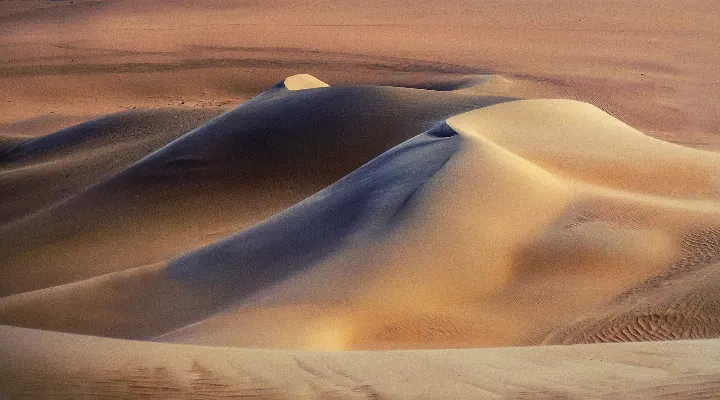
Its landscape is notably varied. Palm and olive groves occupy cultivated areas around the settlements, while natural springs and lakes interrupt the surrounding arid terrain. Beyond the inhabited and agricultural zones, the environment includes sand dunes, flat valleys, plateaus, rocky elevations, wetlands, and parts of the Great Sand Sea. These contrasting landforms are characteristic of the wider Siwa protected area.
Water is fundamental to Siwa’s oasis environment. Natural springs and groundwater have historically supported settlement and agriculture, while lakes and wetland habitats form an important part of the local ecosystem. At the same time, Siwa remains embedded in an extremely dry desert region, so its green cultivated landscape exists in sharp contrast with the surrounding sand and rocky desert.
Siwa Through Ancient Egyptian, Greek, and Roman History
Siwa’s ancient history is closely connected with the cult of Amun and with the oasis’s position between Egypt, Libya, Cyrenaica, and Mediterranean trade networks. Archaeological and classical evidence shows that Siwa was not an isolated settlement: it maintained contacts with surrounding regions and became especially prominent because of the oracle of Amun. Modern scholarship generally dates the major oracle sanctuary at Aghurmi to the Twenty-Sixth Dynasty, probably the reign of Amasis II (570–526 BCE), although the religious importance of the oracle may have earlier roots.
By the Greek period, the oracle had acquired a reputation beyond Egypt. Greek authors referred to the god as Ammon, often identifying him with Zeus. The sanctuary was already known in the wider Greek world before Alexander the Great reached Siwa in 331 BCE. Alexander’s visit became one of the most famous episodes in the oasis’s history, but surviving ancient accounts differ in detail about exactly what was said or revealed to him at the oracle. For that reason, claims that the priests formally “declared Alexander a god” or gave him a specific political title should be treated cautiously rather than as uncontested fact.
During the Ptolemaic and Roman periods, Siwa remained inhabited and economically active. Archaeological research around Lake Zaytun has identified settlements and necropolises that indicate intensive occupation, especially in the Hellenistic and Roman eras. University of Cologne research notes that the oasis participated in caravan networks and, in Roman times, exported products including dates and olive oil. Tombs and other archaeological remains also show increasing connections with cultural and funerary traditions known elsewhere in Egypt.
Roman-period evidence suggests that the oasis continued to support substantial settlement even as the oracle’s earlier international prestige declined. Archaeological remains include tombs, pottery concentrations, settlements, and structures that were used or modified during Roman rule. The long sequence represented by temples, settlements, and cemeteries makes Siwa an important place for understanding how an oasis community interacted with Egyptian, Libyan, Greek, and Roman cultural worlds over many centuries.
The Temple of the Oracle at Aghurmi
The Temple of the Oracle stands at Aghurmi in Siwa Oasis and was the principal sanctuary of the oracle of Amun (Ammon). The surviving temple is built in an Egyptian architectural tradition and is generally dated by scholars to the Twenty-Sixth Dynasty, probably to the reign of Amasis II (570–526 BCE). Oxford’s Classical Dictionary describes the surviving sanctuary at Aghurmi as the famous oracular temple of Ammon and notes a second sanctuary of Amun nearby.
The sanctuary’s importance extended far beyond Siwa. In antiquity, the oracle became known throughout the Mediterranean world, attracting consultation by rulers and other visitors. Ancient Greek traditions identified the Egyptian Amun with Zeus-Ammon, helping the sanctuary acquire a broader Greek and Mediterranean reputation. Its most famous recorded visitor was Alexander the Great, who travelled to Siwa in 331 BCE after taking control of Egypt. The surviving ancient accounts agree on the importance of the visit but differ over precisely what the oracle communicated to him.
Architecturally and historically, the Aghurmi temple therefore represents more than a local religious monument. It reflects the relationship between Siwa and the Egyptian state during the Late Period, while its later fame demonstrates the oasis’s connection with the Greek-speaking Mediterranean. Because the detailed rituals of the Siwan oracle are not fully documented by surviving evidence, modern reconstructions of exactly how every consultation was performed should be treated cautiously.
Alexander the Great and the Oracle of Amun
Alexander the Great visited the oracle of Amun at Siwa in 331 BCE, during his stay in Egypt after the country had passed from Persian control to his rule. The visit became one of the most famous episodes associated with Siwa. Ancient historians preserved different versions of Alexander’s journey and consultation, and modern scholarship therefore distinguishes between the historical visit itself and later interpretations of what the oracle supposedly told him.
The sanctuary was already renowned before Alexander arrived. Greek tradition identified the Egyptian god Amun with Zeus-Ammon, and the Siwan oracle was known in the Greek world by at least the fifth century BCE. Alexander’s consultation consequently took place at an established international oracle rather than at a sanctuary whose fame began with him.
What happened inside the sanctuary is less certain. Later ancient accounts connected the episode with Alexander’s relationship to Zeus-Ammon and with ideas about divine parentage. However, the Oxford Classical Dictionary notes that the story of Zeus-Ammon acknowledging Alexander as his son, and thereby implying his divinity, appears to be a later elaboration. Recent scholarship also argues that Alexander’s Egyptian pharaonic titulary could identify him as a “son of Amun” within Egyptian royal ideology without demonstrating that he was making a universal claim to divine parentage outside Egypt.
The safest historical conclusion is therefore that Alexander deliberately travelled to the prestigious oracle of Amun and that the encounter became important to later representations of his kingship. Precisely what questions he asked, what answers he received, and how he personally interpreted them cannot be reconstructed with certainty from the surviving evidence.
The Temple of Amun at Umm Ubaydah
The Temple of Amun at Umm Ubaydah—also written Umm Ubayda or Umm Ubeida—stood a short distance south of the Temple of the Oracle at Aghurmi and formed part of Siwa’s wider sacred landscape dedicated to Amun. UNESCO specifically includes the Temple of Amun “Ubaydah” among the principal monuments of the Siwa archaeological area on Egypt’s World Heritage Tentative List.
Archaeological reference works describe Umm Ubaydah as a substantial sanctuary, approximately 50 × 120 meters in extent, once richly decorated with raised-relief scenes and hieroglyphic inscriptions. Excavations have identified remains of palmiform columns and architraves, suggesting that the complex included a colonnaded forecourt. Inscriptions associate the temple with a local Siwan ruler named Wenamun and with Nectanebo II, the last native pharaoh of Egypt’s Thirtieth Dynasty.
The temple is now heavily ruined, with only a limited portion of its decorated structure surviving above ground. Among the surviving inscriptions is material connected with the Opening of the Mouth ritual, a funerary rite more commonly documented on tombs, coffins, and funerary texts. This unusual context has led scholars to examine whether the monument may also have had a funerary dimension connected with Wenamun, although interpretations of its precise function remain open to discussion.
The relationship between Umm Ubaydah and Aghurmi is especially important. The two sanctuaries were aligned, and archaeological research has supported the existence of a processional route between them. Recent interpretations suggest that an earlier sacred building may have occupied the Umm Ubaydah site before the surviving temple associated with the reign of Nectanebo II. This possibility helps explain how the two sanctuary areas could have functioned together over a longer period.
Mountain of the Dead and the Ancient Tombs of Siwa
Gebel al-Mawta, or the Mountain of the Dead, is one of Siwa Oasis’s principal archaeological areas. It is a rocky hill penetrated by numerous rock-cut tombs, forming an ancient necropolis that overlooks the oasis. UNESCO documentation describes Gebel al-Mawta as a Roman-era necropolis containing dozens of rock-cut tombs, while archaeological evidence from individual burials shows that activity at the cemetery spans more than a single period.
Among the best-known decorated tombs is the Tomb of Si-Amun. Its painted scenes combine Egyptian funerary imagery with features that scholars have associated with the multicultural environment of Hellenistic and Roman-period Siwa. The decoration includes Si-Amun worshipping Egyptian deities, representations of Nut and other gods, and later niches cut into the chamber for additional burials during the Roman period. The tomb is commonly dated to around the third century BCE, although scholars have proposed somewhat different chronological interpretations and later reuse.
Other important burials include the Tomb of Niperpathot, whose owner held priestly titles connected with Osiris, and the tomb conventionally called Mesu-Isis, named after the only clearly readable personal name preserved there. The latter is generally placed between the fourth and second centuries BCE. Another burial, known as the Tomb of the Crocodile, takes its modern name from one of its painted animal figures. Together, these tombs preserve inscriptions, religious scenes, and funerary imagery that help document beliefs and cultural contacts in ancient Siwa.
The cemetery is therefore especially valuable because it demonstrates that Siwa’s ancient population participated in Egyptian funerary traditions while also living in an oasis connected with Libyan, Greek, and later Roman cultural spheres. The Egyptian Ministry of Tourism and Antiquities identifies the tombs of Gebel al-Mawta among Siwa’s significant ancient monuments.
Shali Fortress and Traditional Kershef Architecture
At the center of Siwa stands the historic settlement of Shali, one of the oasis’s most distinctive architectural landmarks. According to Egypt’s Ministry of Tourism and Antiquities, Shali dates to the sixth century AH / twelfth century CE. Its name derives from a Siwi word meaning “city.” The settlement developed as a compact fortified community, enclosed by a strong defensive wall and originally entered through a single gate known as Bab Anshal.
Shali’s defining building material is kershef, a traditional local mixture based on salt-rich earth and clay. The Ministry notes that the material becomes extremely hard after drying. Its use gave Shali its characteristic earthen appearance and represents an architectural response to locally available materials and the environmental conditions of the oasis. Houses, walls, passages, and religious buildings were constructed within the dense settlement using this regional tradition.
As Shali expanded, additional entrances were created. A second gate, Bab Athrat, was opened on the southern side near an oil press, followed later by another entrance called Qaduha, which the Ministry records as having been reserved for women. Within the historic settlement are the Al-Ateeq Mosque, the Sheikha Hasina Mosque, also known as the Tandi Mosque, domestic ruins, and six deep wells that historically supplied inhabitants with drinking water.
The old settlement suffered extensive deterioration over time, but conservation and restoration works have since been undertaken. The Ministry of Tourism and Antiquities states that restoration of Shali was completed and that the historic ruins are accessible to visitors. Today, Shali is important not only as a surviving fortified settlement but also as evidence of Siwa’s traditional building knowledge and the long use of kershef architecture in the oasis.
Siwa’s Springs, Salt Lakes, and Wetlands
Water defines much of Siwa’s landscape. Although the oasis lies in an extremely arid region with very little rainfall, groundwater emerges through numerous springs and feeds pools, lakes, and wetland areas. Egyptian government sources describe these groundwater-fed depressions as supporting vegetation as well as habitats for plant and animal life within the wider Siwa protected area.
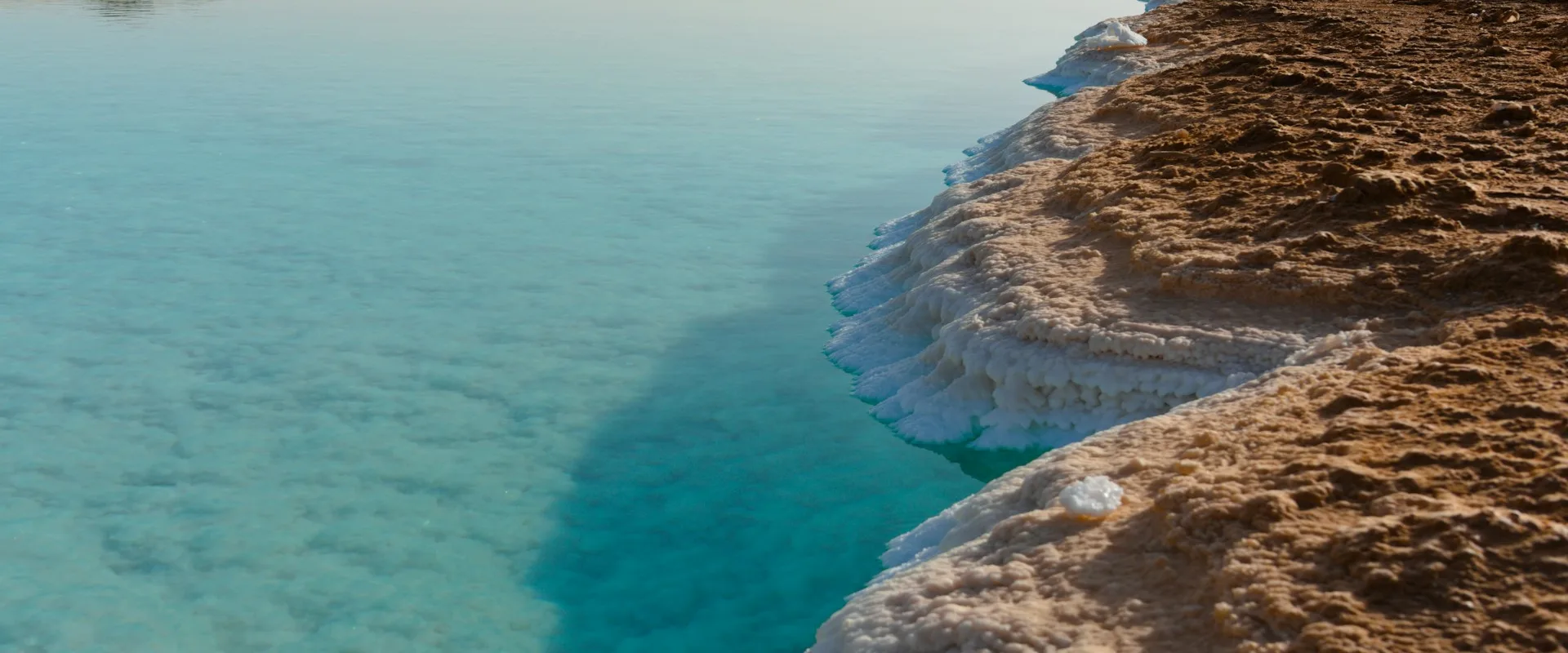
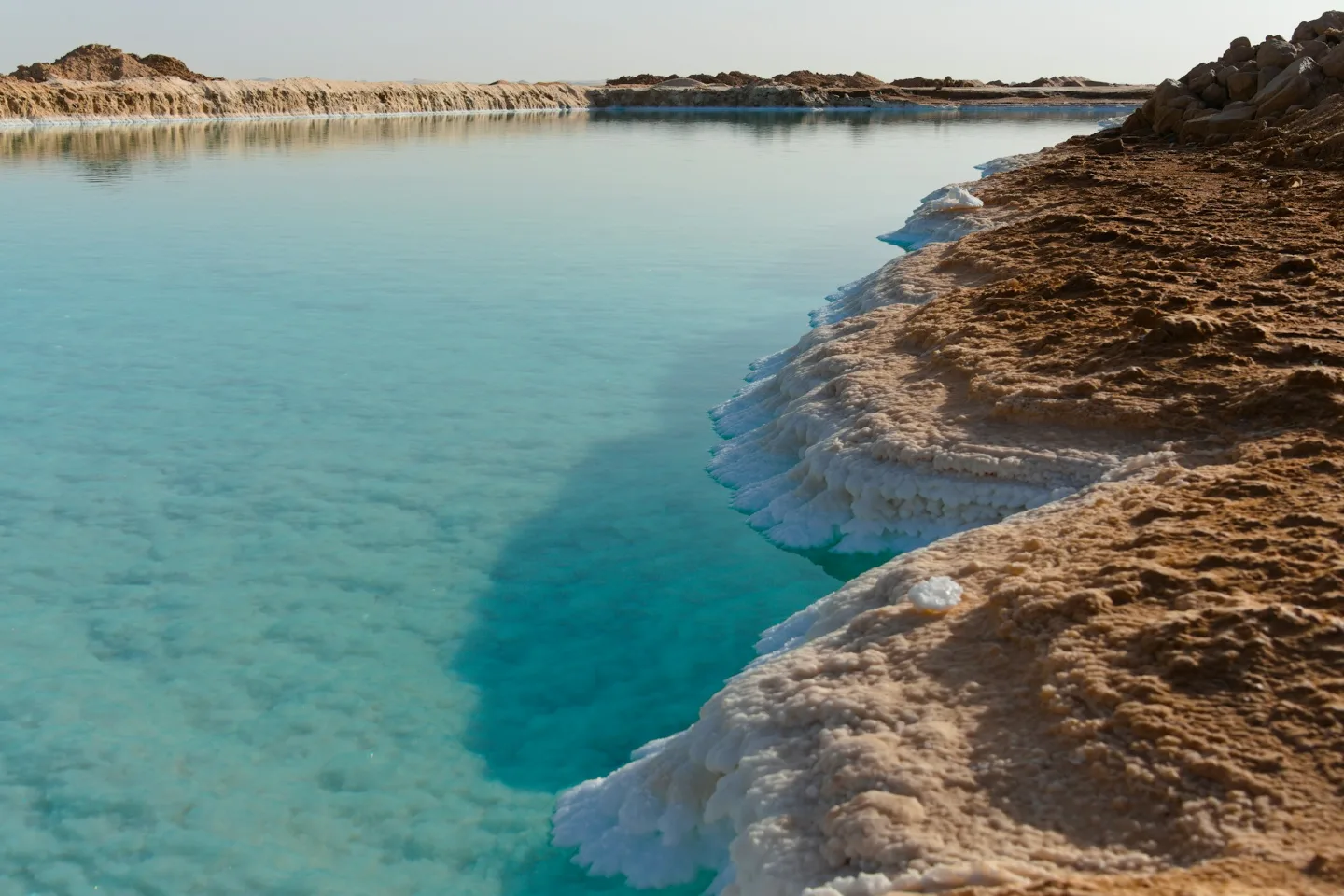
Siwa is also characterized by saline depressions and salt lakes. UNESCO documentation classifies the oasis as a depression–sebkha environment and notes that its settlement and agricultural landscape developed around lakes, salt depressions, springs, pools, and water-distribution systems. The same documentation records roughly 200 water sources within the oasis area, illustrating how strongly groundwater has shaped both agriculture and human settlement.
These waters perform different roles. Fresh and brackish groundwater has historically supported palm groves, olive cultivation, domestic use, and irrigation, while saline lakes and marshy areas form another component of Siwa’s ecological system. Together, the springs, cultivated land, salt depressions, and wetlands create the distinctive contrast between the green oasis interior and the surrounding Western Desert.
Some springs and salt lakes have also become visitor attractions, including bathing locations that are promoted locally for wellness and traditional therapeutic practices. Such practices form part of contemporary tourism in Siwa, but medical claims about treating particular illnesses should be distinguished from clinically established therapies. Egyptian state tourism material documents the popularity of salt-lake swimming and spring bathing as traditional wellness activities.
Siwa Nature Reserve and Desert Biodiversity
Siwa Nature Reserve was declared a protected area in 2002 under Prime Ministerial Decision No. 1219. Current Egyptian Environmental Affairs Agency information lists it as covering approximately 7,731 km² and classifies it as a national park. The protected area encompasses several sectors around the oasis and includes contrasting environments such as wetlands, sand dunes, rocky hills, plateaus, and desert landscapes.
Despite the extreme aridity of the Western Desert, Siwa supports notable biological diversity. The Egyptian Environmental Affairs Agency records more than 40 species of wild plants, including medicinal, grazing, and sand-stabilizing plants, together with stands of acacia and tamarisk. It also records approximately 28 species of wild mammals, 32 reptile species, and 164 bird species, in addition to numerous invertebrates and insects.
Among the mammals officially documented for the reserve are the striped hyena, Egyptian gazelle, white gazelle, red fox, and fennec fox. Egypt’s environmental authorities have also undertaken species-monitoring work in Siwa; a 2024 protected-area report recorded monitoring of the Egyptian gazelle within the reserve. These records show that Siwa functions not only as a cultural landscape but also as an important conservation area for desert-adapted wildlife.
Birdlife is particularly important around the oasis’s lakes and wetlands. Government sources note that these water bodies attract migratory birds, making the wetland habitats especially significant within an otherwise arid desert environment. The reserve therefore protects a mosaic of habitats rather than a single ecosystem, linking springs and wetlands with dunes, rocky terrain, cultivated landscapes, and open desert.
Palm Groves, Olives, and the Agricultural Landscape
Agriculture is one of the defining features of Siwa’s cultural landscape. The oasis’s traditional farming system is centered on date palms, combined with olive trees, alfalfa, fruits, vegetables, and other crops. FAO recognizes this system as a Globally Important Agricultural Heritage System (GIAHS), designated in 2016, because of the way local communities adapted farming and water management to an extremely dry environment.
Traditional Siwan gardens are often organized as a multi-layered agricultural system. Date palms form the highest canopy, fruit trees occupy an intermediate level, and vegetables, fodder crops, and other low-growing plants are cultivated below. This structure creates shade and a more favorable microclimate for crops beneath the palms, allowing farmers to make efficient use of limited cultivated land.
Dates and olives remain particularly important to local livelihoods. FAO identifies agriculture as a foundation of Siwa’s economy and notes that the oasis preserves distinctive local varieties of date palms, olives, and secondary crops. Products grown in the oasis include dates, olives, grapes, tomatoes, cucumbers, molokhia, mint, and karkade, alongside fodder crops such as alfalfa.
Water management is inseparable from this agricultural system. Traditional surface irrigation has long been used in small cultivated basins, while more recent projects have introduced and tested modern irrigation methods such as drip systems in newly reclaimed areas. FAO and Egyptian government partners have also worked with local farmers on water-use efficiency and good agricultural practices for date and olive cultivation.
The palm and olive groves therefore represent more than agricultural production alone. They form a human-shaped landscape that reflects generations of adaptation to Siwa’s groundwater resources, desert climate, and local ecological conditions. This close relationship between farming, water, biodiversity, and traditional knowledge is the central reason FAO recognizes Siwa’s date-production system as agricultural heritage of international importance.
Siwan Culture, Language, Crafts, and Local Heritage
Siwa has a distinctive cultural identity shaped by its long geographic isolation, its Amazigh heritage, and centuries of contact with Arabic-speaking communities. Siwi, an Amazigh language, remains an important marker of local identity. Recent linguistic research describes Siwa as a multilingual environment in which Siwi is spoken by much of the indigenous Siwan population, while Arabic is also widely used, particularly in communication beyond the local community.
Language in Siwa is closely connected with ideas of belonging and local identity. Field-based sociolinguistic research has shown that speakers often associate the use of Siwi with solidarity, familiarity, and membership in the Siwan community. At the same time, everyday language practices are not rigid: Siwi and different varieties of Arabic coexist and interact within the oasis.
Traditional craftsmanship forms another important part of Siwan heritage. Embroidery, especially distinctive Siwan cross-stitch work, has historically been practiced by women and transmitted across generations. UNESCO identifies Siwan cross-stitch embroidery as a significant Egyptian craft tradition documented from at least the nineteenth century and has supported safeguarding initiatives intended to preserve such skills and strengthen the role of women artisans.
Contemporary heritage studies also document a broader craft sector in Siwa, where traditional skills continue to contribute both to cultural identity and to local livelihoods. Embroidered clothing and household objects, decorative handicrafts, palm-based products, and other locally made goods are now encountered both within community life and in tourism-related markets. Preservation efforts are important because changes in production, consumer demand, and modern technologies can alter or reduce the transmission of older techniques.
Siwan heritage is therefore not limited to monuments such as Shali or the ancient temples. It also survives through language, craftsmanship, agricultural knowledge, architecture, oral traditions, and everyday social practices. These forms of living heritage continue to evolve, making Siwa both a historic landscape and a contemporary cultural community.
The Great Sand Sea and Desert Experiences
South and southwest of Siwa stretches the northern edge of the Great Sand Sea, one of the largest dune systems in Egypt’s Western Desert. Geomorphological research describes it as covering more than 100,000 km², extending broadly from the Gilf Kebir Plateau in the south toward the Siwa Depression in the north. Much of the landscape is dominated by extensive linear dune systems, although other dune forms also occur around Siwa.
For visitors, this immense dune landscape is one of Siwa’s principal outdoor attractions. Egypt’s official tourism portal specifically identifies the Great Sand Sea near Siwa as a destination for desert exploration and sandboarding, with excursions commonly undertaken using four-wheel-drive vehicles. The same official guidance advises travelers to arrange desert trips through hotels, licensed tour operators, or experienced guides and to confirm whether particular areas require permits or have access restrictions.
Among the places associated with excursions from Siwa is Bir Wahed, a desert stop promoted by Egypt’s official tourism platform for its spring and nearby freshwater lake. Excursions may also include dune driving, climbing or walking on dunes, sunset viewing, and sandboarding. These activities should be understood as organized desert experiences rather than unrestricted travel across the Great Sand Sea, whose scale, difficult terrain, and remote conditions make local logistical knowledge important.
The dunes also have scientific importance. Research around Siwa documents active dune migration and its effects on geological and fossil-bearing sites, showing that the desert landscape is dynamic rather than fixed. The Great Sand Sea therefore contributes to Siwa’s significance both as a tourism environment and as a major geomorphological landscape of Egypt’s Western Desert.
Siwa Archaeological Area and UNESCO’s Tentative List
The Siwa archaeological area has been included on Egypt’s UNESCO World Heritage Tentative List since 1 November 1994, under reference number 186. UNESCO classifies the proposed property as Cultural and records that it was submitted by the Egyptian Antiquities Organization.
UNESCO’s current description is brief but specific: the proposed archaeological area includes the Temple of the Oracle, the Temple of Amun at Ubaydah, and other archaeological areas and monuments in Siwa. The listing therefore concerns Siwa’s archaeological heritage as a group rather than a single isolated monument.
Its status requires an important distinction. A place on a country’s Tentative List is not yet a World Heritage Site. The Tentative List is an inventory of properties that a State Party may consider nominating for inscription in the future. Siwa’s archaeological area remains listed in this preliminary category and should therefore not be described as “UNESCO World Heritage” without qualification.
The UNESCO record is also historically old and provides only a short description rather than a detailed modern nomination dossier. For that reason, claims about the exact boundaries, all component sites, management arrangements, or the Outstanding Universal Value of a future nomination should not be inferred beyond what UNESCO currently publishes. The verified status is specifically Tentative List, Cultural category, submitted in 1994.
Understanding Siwa as a Cultural and Natural Destination
Siwa is best understood not as a destination defined by one monument or one landscape, but as a place where archaeology, traditional architecture, living culture, agriculture, wetlands, and desert environments coexist within the same oasis. Egypt’s Ministry of Tourism and Antiquities highlights this combination through sites such as the Temple of Amun, the Mountain of the Dead, Shali, Cleopatra’s Spring, Fatnas, and the salt lakes.
Its cultural importance is visible in several different layers. Ancient temples and tombs document the oasis’s role in Egyptian, Greek, and Roman history, while Shali preserves a traditional settlement built largely with local salt-and-mud construction techniques. Siwa also remains a living cultural community with its own Amazigh-rooted language, customs, food traditions, crafts, and forms of local hospitality. Egypt’s official tourism platform presents these traditions as an essential part of experiencing the oasis rather than as a separate museum-like heritage.
The natural landscape is equally fundamental. Siwa Nature Reserve, officially declared in 2002, protects thousands of square kilometers encompassing desert terrain, wetlands, lakes, dunes, vegetation, and wildlife habitats. The oasis therefore offers a rare juxtaposition of cultivated palm and olive groves with salt lakes, springs, rocky formations, and the dunes of the surrounding Western Desert.
For visitors, this combination supports very different experiences within a single destination: exploring archaeological sites, walking through Shali, visiting springs and salt lakes, learning about Siwan traditions, and travelling into the desert landscape. These experiences are interconnected rather than independent. The springs and groundwater supported settlement and agriculture; local materials shaped traditional architecture; desert isolation contributed to the preservation of distinctive cultural practices; and ancient religious and trading connections linked the oasis to regions far beyond Siwa itself.
For this reason, Siwa’s significance lies in the relationship between people, history, and environment. Its archaeological remains should be understood alongside its living traditions and protected natural landscapes. Together they make Siwa one of Egypt’s clearest examples of an oasis functioning simultaneously as a historic landscape, a contemporary community, an agricultural environment, and a desert destination.