Introduction to Fayoum Oasis
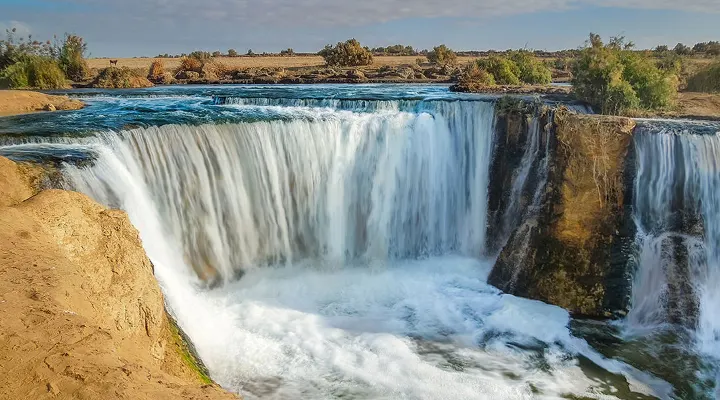
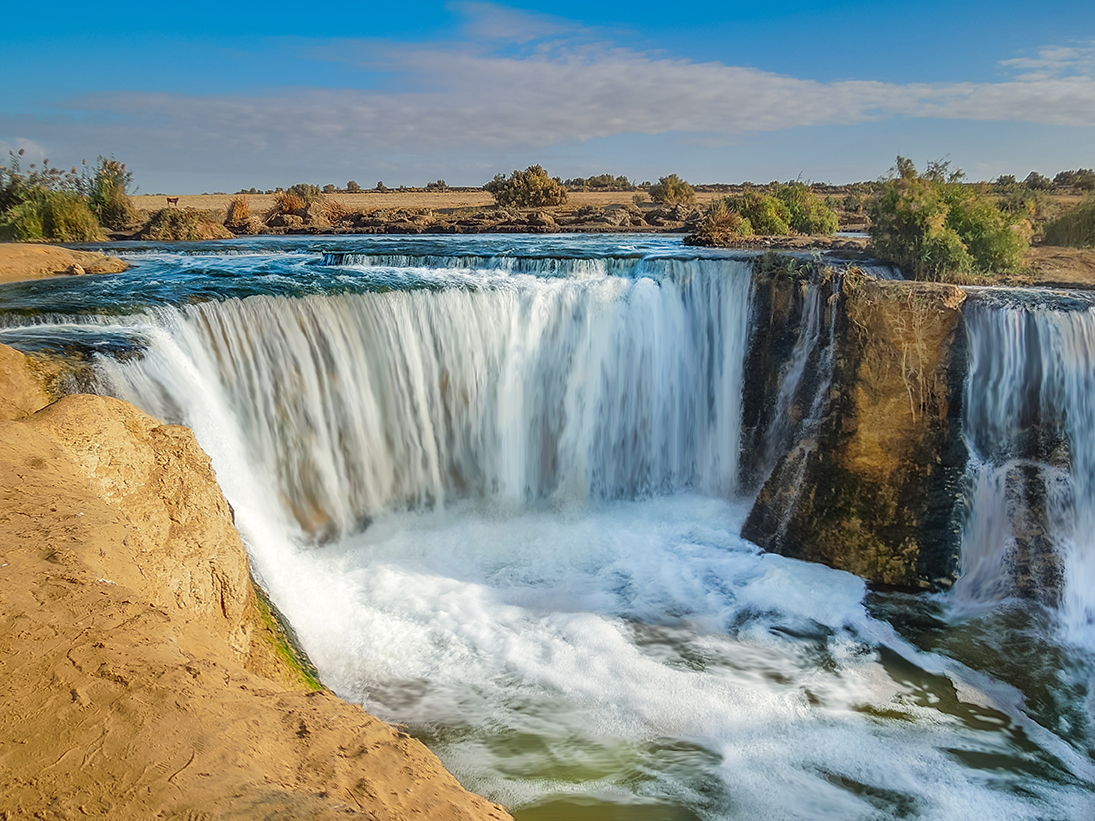
Fayoum Oasis is one of Egypt's most distinctive geographic and cultural regions, situated approximately 100 kilometers southwest of Cairo. Unlike the traditional oases of Egypt's Western Desert that rely solely on subterranean groundwater springs, Fayoum is a deep natural depression fed by the waters of the Nile River via a natural branch known as Bahr Yussef (the Canal of Joseph). This unique hydrological link has transformed the basin into a lush, fertile agricultural haven bordered by arid desert landscapes, dramatic sand dunes, and expansive saltwater lakes.
Spanning thousands of years of human habitation, Fayoum played a prominent role in ancient Egyptian civilization, serving as a political, agricultural, and religious hub, particularly during the Middle Kingdom and Greco-Roman periods. Today, it stands as a multifaceted destination offering a rich mix of eco-tourism, UNESCO World Heritage paleontological sites, Middle Kingdom pyramids, historical Greco-Roman settlements, traditional handicrafts, and active outdoor adventures like sandboarding and safari expeditions.
Geography and Hydrology: Bahr Yussef and the Depression
Fayoum is uniquely classified as a geographic depression rather than a true desert oasis, covering an area of approximately 1,700 square kilometers. Its lifeblood is not subterranean groundwater, but rather the waters of the Nile River. Water reaches the basin through the Bahr Yussef (Canal of Joseph), an ancient natural offshoot of the Nile that branches off near Dirout in Middle Egypt. After winding its way north, Bahr Yussef enters the Fayoum Depression through the narrow Hawara gap.
Once inside the basin, the water fans out into an intricate network of canals, creating a lush, terraced agricultural landscape. Because the Fayoum basin slopes downward from south-east to north-west, the excess water naturally drains into Lake Qarun, a vast lake sitting at an elevation of roughly 43 meters below sea level. This distinct natural gradient gave rise to the region's famous wooden waterwheels (saqiyas), which were introduced during the Ptolemaic period to lift water to higher fields for irrigation. The stark visual contrast between the rich, green vegetation and the encroaching golden dunes of the Western Desert makes Fayoum's geography one of the most striking and dynamic ecosystems in Egypt.
Etymology and History: Ancient Shedet and Crocodilopolis
The name "Fayoum" originates from the Coptic word Phiom or Pa-yom, which translates to "the Sea" or "the Lake," a direct reference to the expansive Lake Qarun (ancient Lake Moeris) that once dominated the basin. In ancient Egyptian times, the capital of this region was known as Shedet. The city's religious life centered entirely around the worship of Sobek, the crocodile-headed god of water, fertility, and the Nile's inundation.
Because of this intense devotion to Sobek, complete with a sacred temple lake housing a live, jewel-adorned divine crocodile named Petsuchos, the Greeks later named the city "Crocodilopolis." During the Ptolemaic era, the city was renamed once more to Arsinoe in honor of Arsinoe II, the sister-wife of Ptolemy II Philadelphus. Throughout these successive eras, the Fayoum region flourished as a dynamic cultural melting pot where enduring Pharaonic traditions seamlessly blended with Greco-Roman influences, leaving behind a profound and layered archaeological legacy.
The Middle Kingdom Golden Age: Senusret II and Amenemhat III
The 12th Dynasty marked the true golden age of the Fayoum Oasis. Recognizing the immense agricultural potential of the depression, Middle Kingdom pharaohs—most notably Senusret II and his grandson Amenemhat III—embarked on one of the ancient world’s most ambitious land reclamation and hydrological engineering projects. By widening and deepening the Bahr Yussef canal, they controlled the flow of the Nile floodwaters into the basin.
Amenemhat III, in particular, constructed large-scale barrages and dams to transform the massive Lake Moeris into a controlled reservoir. This allowed water to be stored during the annual inundation and efficiently distributed during the dry months, effectively doubling the cultivable land in the region. This economic boom was accompanied by a monumental building program. The pharaohs shifted their royal focus to the Fayoum and its immediate surroundings, erecting grand pyramids, colossal statues (such as the Colossi of Biahmu), and sweeping temple complexes, firmly establishing the oasis as a vital center of power, prosperity, and agriculture in ancient Egypt.
The Pyramids of Fayoum: Hawara, Lahun, and Seila
While the Giza Plateau is globally renowned for its towering solid stone monuments, Fayoum boasts a unique collection of pyramids primarily constructed during the Middle Kingdom. In a departure from Old Kingdom construction methods, these Fayoum pyramids were built with a highly organized core of mudbrick supported by cross walls of limestone, which was then encased entirely in gleaming white limestone blocks. Over millennia, the outer limestone casings were stripped away by stone robbers, leaving behind the distinctive, dark, weather-beaten mudbrick cores visible today.
The most prominent among these are the Pyramid of Hawara and the Pyramid of Lahun. The Pyramid of Hawara, built by Amenemhat III, is famously associated with the legendary "Labyrinth" described by ancient historians such as Herodotus and Strabo—a colossal, maze-like mortuary temple complex of unprecedented size and complexity. Nearby, the Pyramid of Lahun was erected by Senusret II. This site is particularly significant for the discovery of Kahun, an exceptionally well-preserved ancient workers' and priests' town that has provided Egyptologists with immense insight into the daily life, urban planning, and administrative operations of the Middle Kingdom.
A third, much older structure is the Seila Step Pyramid. Perched on a desert ridge overlooking the oasis, this monument dates back to the Old Kingdom (likely the reign of Sneferu in the 3rd or early 4th Dynasty). Unlike traditional pyramids, Seila is classified as a provincial step pyramid, serving as a symbolic monument of royal power and a visible marker of the king's domain rather than a functioning tomb.
Wadi El Hitan: UNESCO World Heritage and Whale Valley
Located deep in the desert landscape of the Fayoum Depression, Wadi El Hitan, or "Whale Valley," is a breathtaking UNESCO World Heritage site and one of the world's most significant paleontological discoveries. This vast open-air museum offers unparalleled evidence of one of the greatest mysteries of evolution: the emergence of whales as ocean-dwelling mammals from their previous life as land-based animals. The valley contains hundreds of exceptionally well-preserved fossils of the earliest, now extinct, suborder of whales known as Archaeoceti.
The most famous specimens scattered across the desert floor include the massive, serpentine Basilosaurus and the smaller Dorudon, both of which remarkably still retained small hind limbs, definitively proving their terrestrial ancestry. Beyond whales, the fossil-rich sands hold remains of early sirenians (sea cows), crocodiles, sharks, and turtles, painting a vivid picture of the shallow, warm Tethys Sea that covered this region some 40 million years ago. Today, visitors can walk along well-marked desert trails to view these magnificent fossils exactly where they were uncovered. The site is further supported by the excellent, climate-controlled Fossil and Climate Change Museum, which masterfully contextualizes the area's profound prehistoric significance.
BLOG ARTICLE — PART 8
Lake Qarun: Ecology, History, and Birdwatching
Lake Qarun (Birket Qarun) is the third-largest lake in Egypt and the most prominent surviving remnant of the massive ancient Lake Moeris. In antiquity, this basin was a vast freshwater reservoir that supported a thriving ecosystem of hippopotamuses, crocodiles, and robust agricultural communities. Over millennia, changes in the Nile's flow, intense evaporation, and agricultural runoff have transformed Lake Qarun into a highly saline body of water. Today, it sits approximately 43 meters below sea level and serves as the primary drainage basin for the Fayoum depression.
Despite its high salinity, Lake Qarun is a thriving, legally protected nature reserve and an internationally recognized Important Bird Area (IBA). Its unique ecosystem makes it a critical stopover for thousands of migratory birds traveling between Europe and Africa during the winter months. Birdwatchers are often treated to spectacular sights of vibrant flamingo flocks, great crested grebes, herons, and various waterfowl dotting the shoreline. For leisure visitors, the southern shores offer a tranquil escape with waterfront cafes, rowboat rentals, and sweeping panoramic views where the shimmering waters beautifully contrast with the rugged, fossil-rich desert backdrop of the Gebel Qatrani mountains to the north.
Tunis Village: Pottery Craftsmanship and Cultural Heritage
Tunis Village (Izbat Tunis) is a picturesque, vibrant community perched on a lush hill overlooking the expansive waters of Lake Qarun. Until the 1980s, it was a relatively quiet, traditional farming and fishing hamlet. Its remarkable transformation into a thriving artistic hub began when Evelyne Porret, a Swiss potter, fell in love with the landscape, built a traditional vaulted mud-brick house, and established a local pottery school. By teaching the local children how to mold the abundant local clay, she revived an ancient craft and profoundly empowered the community economically.
Today, Tunis Village is famous worldwide for its exquisite, vibrantly glazed ceramics, which frequently feature motifs of the surrounding flora, fauna, and rural life. The village itself has blossomed into a living work of art, characterized by narrow streets lined with colorful murals, charming eco-lodges, organic farms, and numerous artisan workshops. It also hosts the highly anticipated annual Tunis Village Pottery Festival, drawing artists, collectors, and cultural enthusiasts from across the globe to celebrate authentic Egyptian craftsmanship in a serene, eco-friendly setting.
BLOG ARTICLE — PART 10
Greco-Roman Towns: Karanis, Dimai, and Medinet Madi
During the Greco-Roman period, Fayoum experienced a massive agricultural and economic boom, leading to the establishment of numerous thriving settlements around the edges of the depression. Today, the ruins of these towns offer a fascinating glimpse into a multicultural society where Egyptian, Greek, and Roman traditions coexisted. The most accessible and well-known is Karanis (modern Kom Aushim), founded by Ptolemy II. It features the remains of Roman baths, houses, and two prominent stone temples dedicated to local variations of the crocodile god Sobek (Pnepheros and Petesouchos).
Further into the desert north of Lake Qarun lie the dramatic, isolated ruins of Dimai (Soknopaiou Nesos), once a bustling caravan stop connected to the lake by a paved processional way. To the southwest, Medinet Madi (Narmouthis) stands out as one of the most important archaeological sites in the region. It boasts a remarkably preserved Middle Kingdom temple built by Amenemhat III and Amenemhat IV, which was later significantly expanded by the Ptolemies with a long, sphinx-lined avenue, perfectly illustrating the architectural and religious continuity between Pharaonic and Ptolemaic Egypt.
The Fayoum Mummy Portraits: Masterpieces of Classical Art
Perhaps the most globally recognized artistic legacy of this region is the stunning collection of Fayoum Mummy Portraits. Dating primarily to the Roman period (1st to 3rd centuries AD), these incredibly lifelike, naturalistic portraits were painted on wooden boards and attached directly to the wrappings of mummies, covering the faces of the deceased. Discovered in vast numbers at sites like Hawara and throughout the Fayoum basin, they represent an extraordinary fusion of classical Greco-Roman painting techniques and enduring traditional Egyptian funerary customs.
The artists primarily used the encaustic method—mixing pigment with hot beeswax—or tempera to create vibrant, highly individualized depictions of the local elite. The subjects are depicted with modern-looking hairstyles, contemporary Roman jewelry, and expressive eyes, bridging the gap between the ancient and modern worlds. Today, these masterpieces are considered among the absolute finest surviving examples of classical panel painting in the world. While many of the portraits have been dispersed to major museums globally, their discovery in Fayoum fundamentally changed our understanding of ancient art and vividly brought to life the multicultural society of Roman Egypt.
Outdoor Activities: Sandboarding, Safaris, and Camping
Beyond its rich history and archaeological wonders, Fayoum is Egypt's premier hub for eco-tourism and outdoor adventure. The dramatic juxtaposition of vast desert dunes rolling directly into expansive lakes creates a perfect playground for nature enthusiasts. One of the most popular activities is sandboarding down the steep, golden dunes surrounding the "Magic Lake"—a secluded body of water in Wadi El Rayan known for its mesmerizing color changes throughout the day depending on the sunlight.
For those seeking adrenaline, 4x4 desert safaris offer exhilarating rides across the rugged, rocky terrain of Gebel Qatrani, often combined with stops at ancient fossil sites and sweeping panoramic viewpoints. As the sun sets, the desert transforms into a tranquil retreat ideal for camping, stargazing, and enjoying a traditional Bedouin-style dinner around a crackling campfire. Visitors looking for a slower pace can enjoy horseback riding along the lush agricultural edges, or relaxing boat trips on Lake Qarun, offering a peaceful vantage point to take in the unique natural beauty of the oasis.
BLOG ARTICLE — PART 13
Visitor Guide: Transport, Best Season, and Travel Tips
Fayoum is highly accessible, located just a 1.5 to 2-hour drive from Cairo. The most convenient way to reach the oasis is by private car, taxi, or organized tour, though public microbuses frequently depart from Remaya Square in Giza. The best time to visit Fayoum is during the cooler months, from October to April, when the weather is ideal for outdoor activities, desert safaris, and exploring archaeological sites without the intense summer heat. Winter is also the peak season for birdwatching at Lake Qarun.
When planning your trip, consider hiring a local 4x4 guide for venturing into desert areas like Wadi El Hitan and the Magic Lake, as regular vehicles cannot navigate the deep sand. It is highly recommended to carry enough cash, as ATMs are scarce in rural areas and eco-villages like Tunis. Finally, while Fayoum is a popular tourist destination, it remains a conservative rural governorate; dressing modestly, particularly when visiting local villages and markets, is respectfully advised to ensure a welcoming experience.