
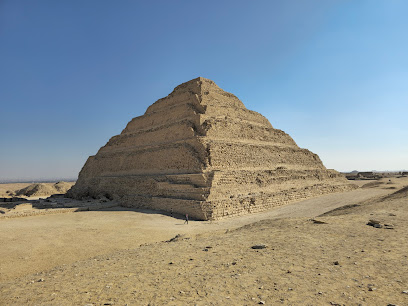
The Step Pyramid of Djoser at Saqqara is one of the turning points in world architecture. Built in the early Third Dynasty for King Netjerykhet Djoser, it is widely regarded as Egypt’s first pyramid and one of the earliest monumental stone structures. Its architect is traditionally identified as Imhotep, a figure later remembered for extraordinary wisdom and skill.
Before Djoser, elite tombs were usually mastabas: flat-roofed rectangular structures. At Saqqara, this idea was transformed into a six-stepped pyramid rising above a large ceremonial complex. The pyramid was not isolated; it stood within a vast enclosure containing courts, chapels, symbolic buildings, and spaces linked to royal rituals. This complete design shows that the monument was as much about kingship and regeneration as it was about burial.
The complex is part of the wider Memphis and its Necropolis World Heritage landscape, which includes pyramid fields from Giza to Dahshur. Saqqara remained a major burial and ritual area for centuries, making it one of the richest archaeological zones in Egypt. Visiting Djoser helps travelers understand the beginning of the pyramid tradition before seeing the later smooth-sided pyramids.
For the best experience, visitors should look beyond the pyramid shape itself. The enclosure wall, entrance colonnade, courts, and symbolic buildings explain how early royal architecture developed. The Step Pyramid is not only old; it is experimental, ambitious, and deeply influential. It marks the moment when Egyptian builders began to imagine monuments on a scale that would define the ancient world.