
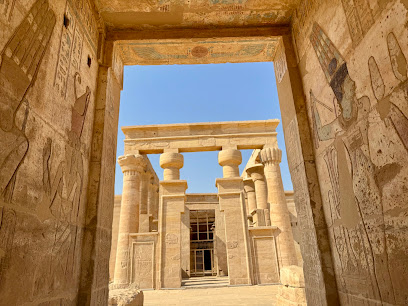
Hibis Temple is one of the most rewarding heritage stops in Egypt’s Western Desert because it tells a story that is different from the Nile Valley monuments most travelers know. Standing near Kharga Oasis, the temple preserves a long religious history in a desert setting that once formed part of important caravan routes. Its architecture and decoration reflect centuries of activity, with work associated with the Late Period and later Persian, Ptolemaic, and Roman phases. For visitors, the result is a compact but rich monument where inscriptions, gateways, columns, and sanctuary spaces reveal how Egyptian religious traditions continued and adapted under changing political powers.
The temple was dedicated mainly to Amun and the Theban triad, connecting Kharga to the great religious landscape of Thebes while still keeping its own oasis identity. A visit here is not about crowds or giant scale; it is about atmosphere, survival, and detail. The surrounding desert, palm groves, and open sky make the temple feel remote, even though it is accessible from the modern oasis. Travelers interested in archaeology, photography, and desert culture should place Hibis near the top of any Kharga itinerary.
The best way to experience the site is slowly. Start outside to read the shape of the temple against the landscape, then move through the gateways and columned areas toward the inner rooms. Look for the way Egyptian gods, royal imagery, and ritual scenes are arranged across the walls. Because the site is exposed, morning or late afternoon light is usually more comfortable and better for photography. Hibis also pairs naturally with Bagawat, Kharga Museum, and other oasis temples, making it a strong anchor for a full cultural day in the New Valley.