
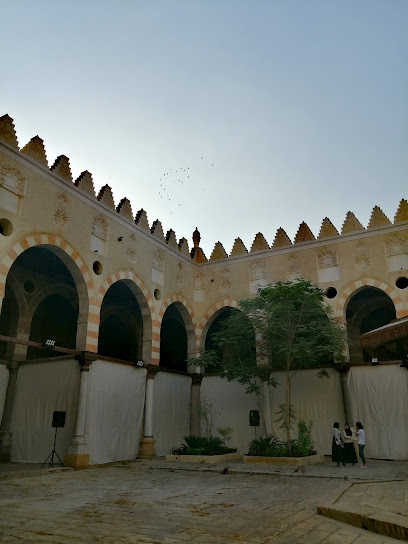
Mosque of Amir al-Maridani is one of the attractions that helps travelers understand Egypt beyond a single postcard view. It can be visited as a focused stop, combined with nearby landmarks, or used as part of a themed itinerary for history, architecture, religion, culture, or coastal leisure. The Mosque of Amir al-Maridani is a major Mamluk mosque in al-Darb al-Ahmar, recently rehabilitated through a conservation project supported by the Aga Khan Trust for Culture and partners. It offers a rich example of fourteenth-century Cairo architecture.
For an attraction details page, the strongest angle is to explain why this place matters, what visitors should look for, and how it fits into the wider Egyptian story. A good visit usually starts with the setting. Notice the surrounding streets, the approach to the entrance, the relationship with nearby monuments, and the way the site changes from a quick photo stop into a place with layers of meaning. This context is especially important in Egypt, where a mosque, palace, temple, cemetery, garden, or resort town often reflects several periods of history at the same time.
The visitor experience should be described in practical but inspiring language. Travelers want to know whether the site is best for architecture lovers, families, photographers, religious heritage visitors, or people building a relaxed city walk. They also need realistic expectations: some places are quiet and contemplative, some are busy and urban, and others are best visited with a guide who can explain details that are easy to miss. For SEO, the page should include the official or common English name, the Arabic name “مسجد الأمير المارداني”, the city or region, nearby places, and natural search phrases such as “things to do near Mosque of Amir al-Maridani” or “visit Mosque of Amir al-Maridani in Egypt”.
A strong hero image should show the most recognizable view of the site, followed by supporting images that capture details, interiors, inscriptions, streetscape, landscape, or visitor atmosphere. The text should avoid exaggerated promises and should not invent ticket prices or opening hours unless they are synchronized from an official source. Instead, it should encourage users to check current timings before visiting and to respect local rules, photography restrictions, religious etiquette, and conservation needs.
In a tour product, Mosque of Amir al-Maridani can work as a primary stop or a complementary attraction. The final page should connect the place to routes, nearby hotels, pickup zones, map coordinates, suggested visit duration, accessibility notes, and recommended combinations. This makes the article useful for both SEO and conversion: the visitor learns the story, understands the experience, and can move naturally toward a reservation.