
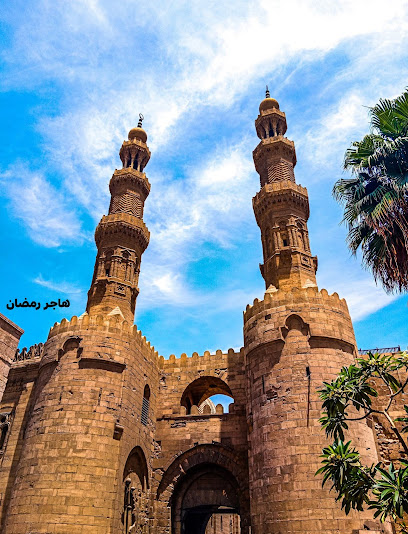
Bab Zuwayla is one of the surviving gates of medieval Cairo and one of the most impressive entrances into the old Fatimid city. Built on the southern side of the historic walls, it formed part of Cairo’s defensive architecture and still gives visitors a powerful sense of arrival. The gate is associated with the works of the Fatimid vizier Badr al-Gamali and dates to the late eleventh century.
The monument is famous for its massive stone towers and for the minarets of the Mosque of al-Mu’ayyad Shaykh that rise above it. From the area around the gate, visitors can understand how the old city was controlled, entered, and protected. The structure also marks a transition between the busy street life of Islamic Cairo and the older ceremonial routes that connected markets, mosques, and the Citadel direction.
For travelers interested in photography and urban history, Bab Zuwayla is a high-value stop. Its scale, stonework, and street setting make it visually dramatic. It can be combined with Al-Muizz Street, the Tentmakers’ Street area, Al-Ghuri complex, and nearby Mamluk monuments.
The attraction page should explain that Bab Zuwayla is not just a gate; it is a surviving piece of Cairo’s medieval city wall system. Content should highlight Fatimid Cairo, defensive architecture, and the connection between the gate and later Mamluk religious architecture. A strong hero image should include the gate towers and minarets together.